How Much Life Insurance Do I Need
Life Insurance Made Simple. Protection Made Personal.

Know Your Number In 60 Seconds
Financial Planning Month & Breast Cancer Awareness Month
Calculate a coverage amount based on your income, debts, family, and financial goals
The right amount of life insurance is not the same for every person. Your coverage should reflect the people who depend on you, the expenses they could face, how long they may need support, and the resources already available to them.
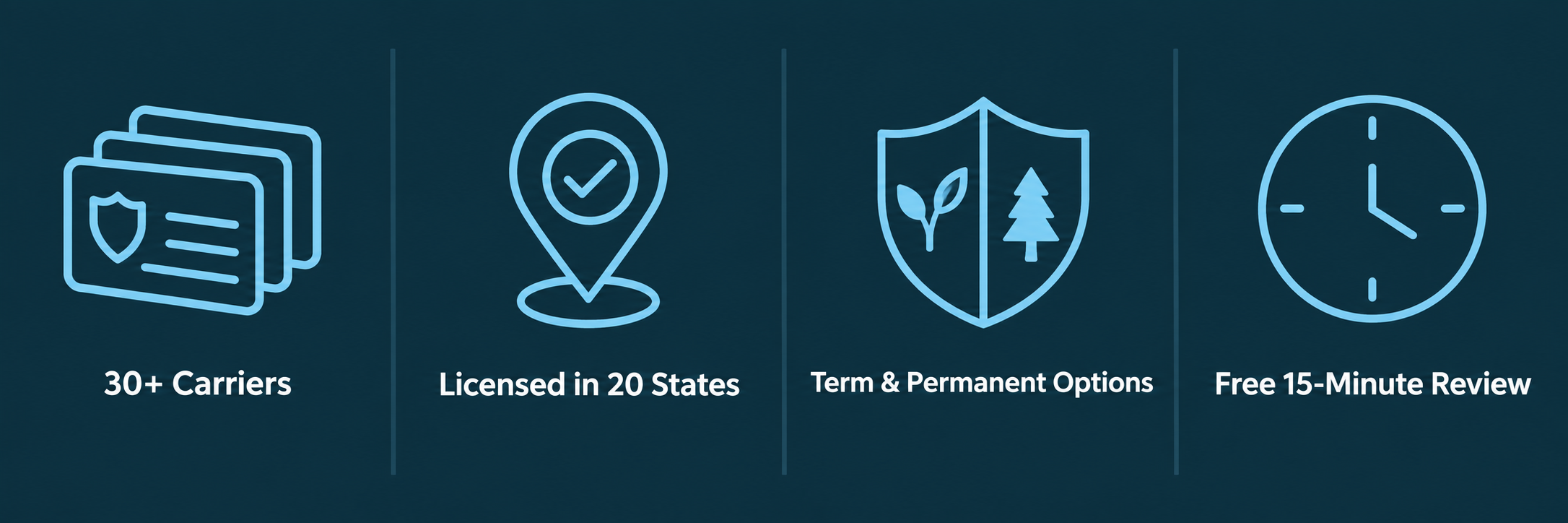
Use the worksheet below to estimate a starting range. Then, Life Insured By Chris can help you compare coverage from more than 30 insurance carriers based on your age, health, state, budget, and goals.
Free 15-minute coverage review • Licensed in 20 states • No obligation to purchase
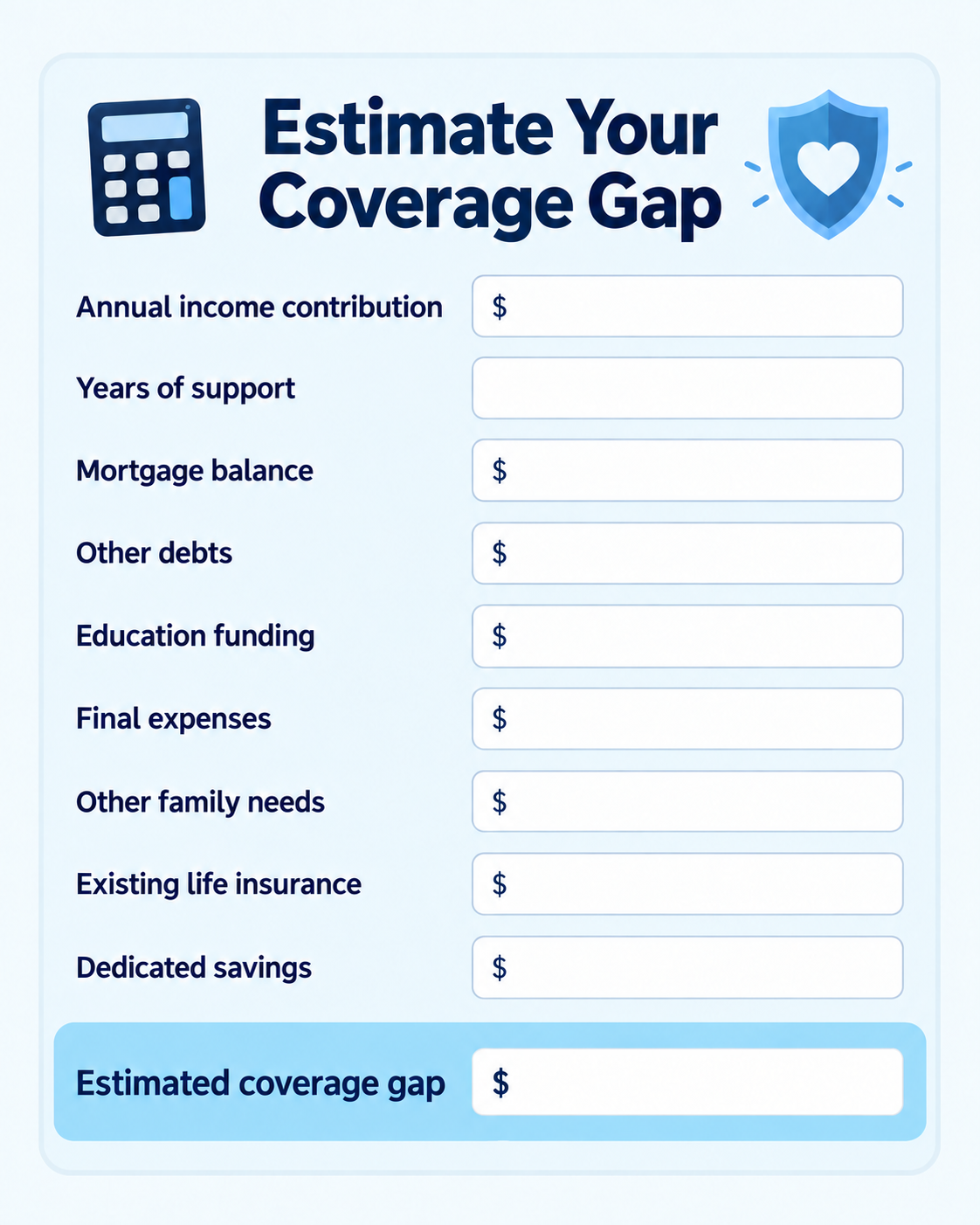
Estimate Your Life Insurance Need
Financial needs
- Income replacement: $_____
- Mortgage balance: $_____
- Other debts: $_____
- Childcare and household support: $_____
- Education funding: $_____
- Final expenses: $_____
- Other family or business obligations: $_____
Total financial needs: $_____
Available resources
- Existing individual life insurance: $_____
- Workplace life insurance: $_____
- Savings designated for your family: $_____
- Other available assets: $_____
Total available resources: − $_____
Estimated coverage need
Total financial needs − available resources = $_____
This worksheet provides an educational estimate, not a quote or individualized financial, legal, or tax recommendation.
Review My Estimate With Life Insured By Chris
The Quick Answer
A common shortcut is to multiply annual income by a certain number, but that method can overlook major differences between families.
Someone earning $75,000 with young children, a mortgage, and limited savings may need substantially more protection than someone earning the same amount with no dependents and significant assets.
A more useful calculation is:
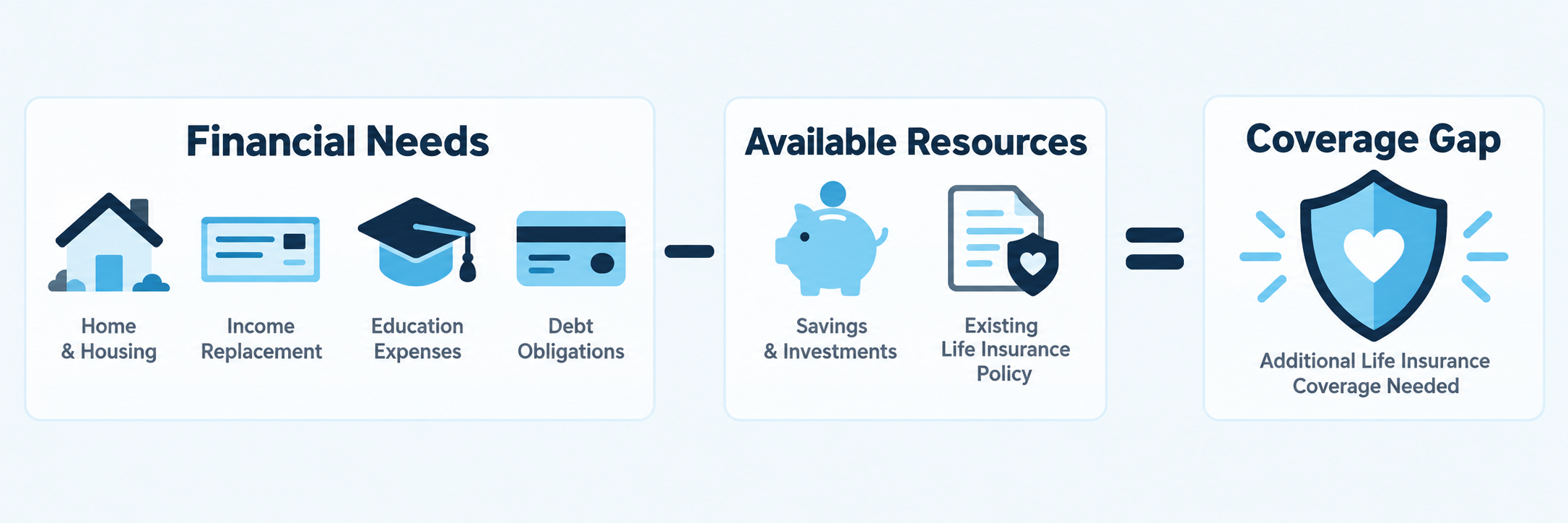
Financial needs − available resources = estimated life insurance need
Your financial needs may include income replacement, debts, education, childcare, final expenses, and other responsibilities. Your available resources may include existing life insurance, dedicated savings, and assets your family could reasonably use.
The result is not automatically the amount you should purchase. It is a starting point that should be reviewed alongside your budget, health, policy type, and the number of years protection may be needed.
A Simple Way to Calculate Your Coverage
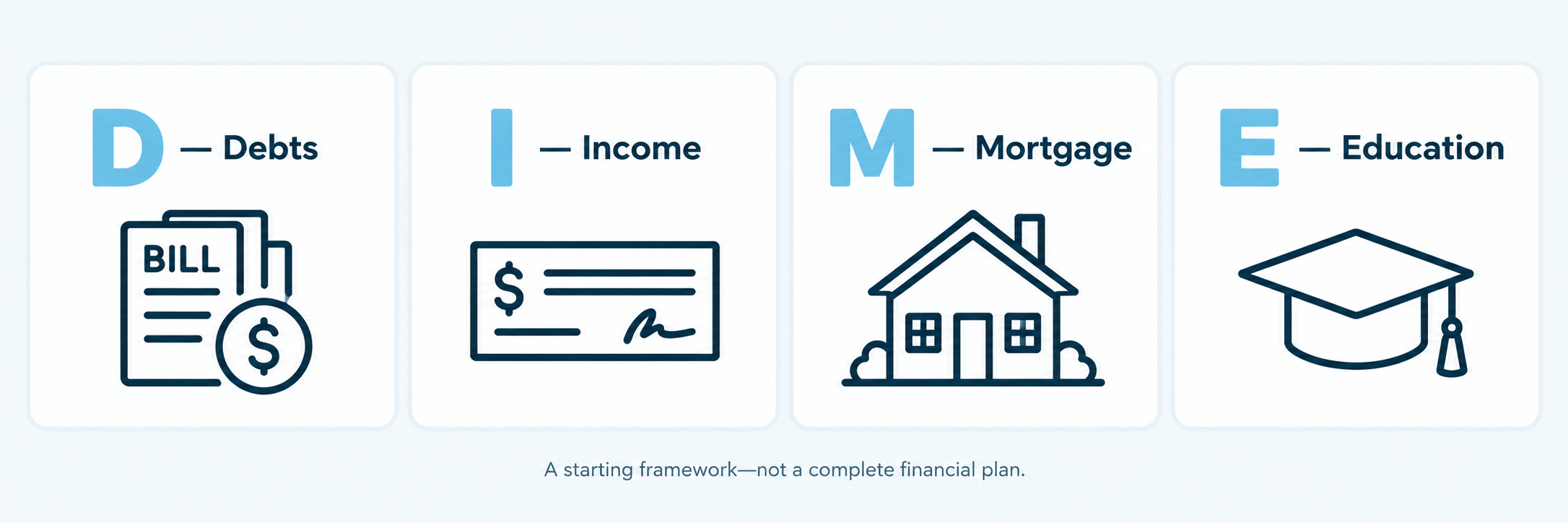
The DIME framework provides a useful starting structure:
D — Debts and final expenses
Add debts your family may need to repay, including:
- Mortgage or rent obligations
- Credit-card balances
- Vehicle loans
- Personal loans
- Private student loans
- Medical bills
- Funeral and final expenses
Some federal student loans may be discharged after death, while private or jointly held obligations may be treated differently. Review the actual loan terms before including or excluding a balance.
I — Income replacement
Estimate how much of your income your family would need and for how many years.
Instead of automatically multiplying your entire salary, consider:
- Your take-home contribution to the household
- How long dependents may need support
- Whether a surviving spouse would continue working
- Social Security survivor benefits that may be available
- Inflation and future household costs
M — Mortgage
Consider whether your family would need enough money to:
- Pay off the entire mortgage
- Make payments for several years
- Cover property taxes, insurance, and maintenance
- Relocate to a more affordable home
Paying off the mortgage is not the right goal for every household. The appropriate amount depends on how your survivors would use the benefit.
E — Education and family needs
Estimate future expenses such as:
- College or vocational education
- Childcare
- Private-school tuition
- Care for a family member with disabilities
- Support for aging parents
- Household services you currently provide
- Emergency savings for your survivors
Get Help Calculating My Coverage
Example Life Insurance Calculation
Consider a household with the following estimated needs:
| Financial need | Example amount |
| Income replacement | $600,000 |
| Mortgage balance | $275,000 |
| Other debts | $35,000 |
| Education funding | $100,000 |
| Final expenses | $20,000 |
| Total financial needs | $1,030,000 |
| Existing insurance and dedicated savings | − $180,000 |
| Estimated coverage gap | $850,000 |
In this example, approximately $850,000 may be a reasonable starting point for comparison. The final decision could be higher or lower depending on the family’s budget, income timeline, assets, existing benefits, health, and goals.
The objective is not to produce a perfect number down to the dollar. It is to identify a realistic range and understand what that coverage is expected to accomplish.

How Much Coverage May Fit Your Stage of Life?
Parents with young children
Consider income replacement, childcare, education, housing, healthcare, and the financial value of unpaid household work. Protection may need to last until children become financially independent or until major family obligations have been met.
Married or partnered couples
Coverage may be appropriate even when only one partner earns outside income. Replacing childcare, transportation, household management, and caregiving services can be expensive. Calculate the financial effect of losing either partner—not only the higher earner.
Homeowners
Consider the mortgage balance, monthly payment, property taxes, insurance, maintenance, and whether your family would remain in the home. Mortgage protection does not necessarily require a specialized mortgage policy. An individually owned life insurance policy may give the beneficiary greater flexibility.
Single parents
A single parent may need coverage for income replacement, childcare, education, housing, and the person who would assume responsibility for the children. Also review beneficiary and trust arrangements before naming a minor child directly.
Working professionals
Employer-provided insurance may be a useful foundation, but it may not replace enough income and may end when employment changes. Individually owned coverage can provide protection that is not tied to one employer.
Stay-at-home parents and caregivers
Even without earned income, caregiving, transportation, meal preparation, household management, and childcare have significant replacement value. Coverage should reflect the cost of replacing those services and the effect on the surviving parent’s ability to work.
Business owners
Consider business debts, operating expenses, personal guarantees, ownership-transfer obligations, key-person needs, and income provided to the family. Business planning may require separate policies or ownership arrangements.
Veterans and military families
Review military life insurance, survivor benefits, pensions, service-related benefits, and any individually owned coverage. Benefits that change after separation or retirement should be considered when calculating a long-term protection gap.
Empty nesters and retirees
Income-replacement needs may decline, but coverage may still be useful for a surviving spouse, debt, final expenses, estate liquidity, equalizing inheritances, or leaving a legacy.
Financial Needs People Commonly Overlook
A coverage calculation should include more than a mortgage and annual salary.
Consider whether your family would need money for:
- Health-insurance changes
- Childcare or eldercare
- Counseling and family support
- Time away from work
- Home maintenance
- Transportation
- Legal or estate expenses
- Family travel
- Education beyond tuition
- Inflation
- Support for a dependent with special needs
- Temporary help managing a business
- Final medical and funeral expenses
Also consider financial resources your family may already have, but avoid assuming every asset should be liquidated immediately. Retirement accounts, a family home, or business ownership may not be practical sources of short-term cash.
How Long Should Your Coverage Last?
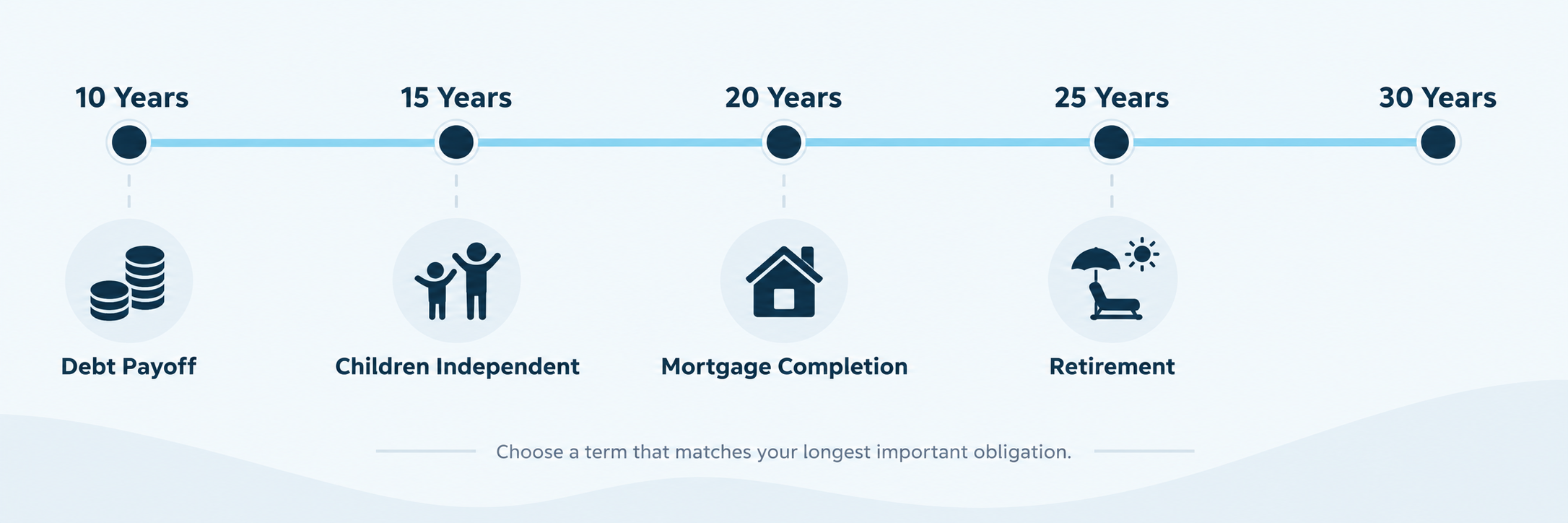
Choosing a coverage amount is only half of the decision. You should also estimate how long the financial need will continue.
Consider a 10-year term when:
- Your mortgage or major debt will end within approximately 10 years
- You are nearing retirement
- Your children will soon become financially independent
- You need temporary business or income protection
Consider a 15- or 20-year term when:
- You have school-age children
- You have 15–20 years remaining on a mortgage
- You want protection through your primary earning years
- Your spouse would need income support until retirement
Consider a 25- or 30-year term when:
- You have young children
- You recently purchased a home
- You want protection through most of your working years
- Your longest financial obligations extend several decades
Consider a longer term or permanent coverage when:
- You expect a lifelong financial obligation
- You support a dependent with special needs
- You need estate or business liquidity
- You want final-expense or legacy protection
- You are concerned about qualifying for new coverage later
Term availability and maximum issue ages vary by carrier, product, health, coverage amount, and state.
Compare Term Lengths and Policy Options
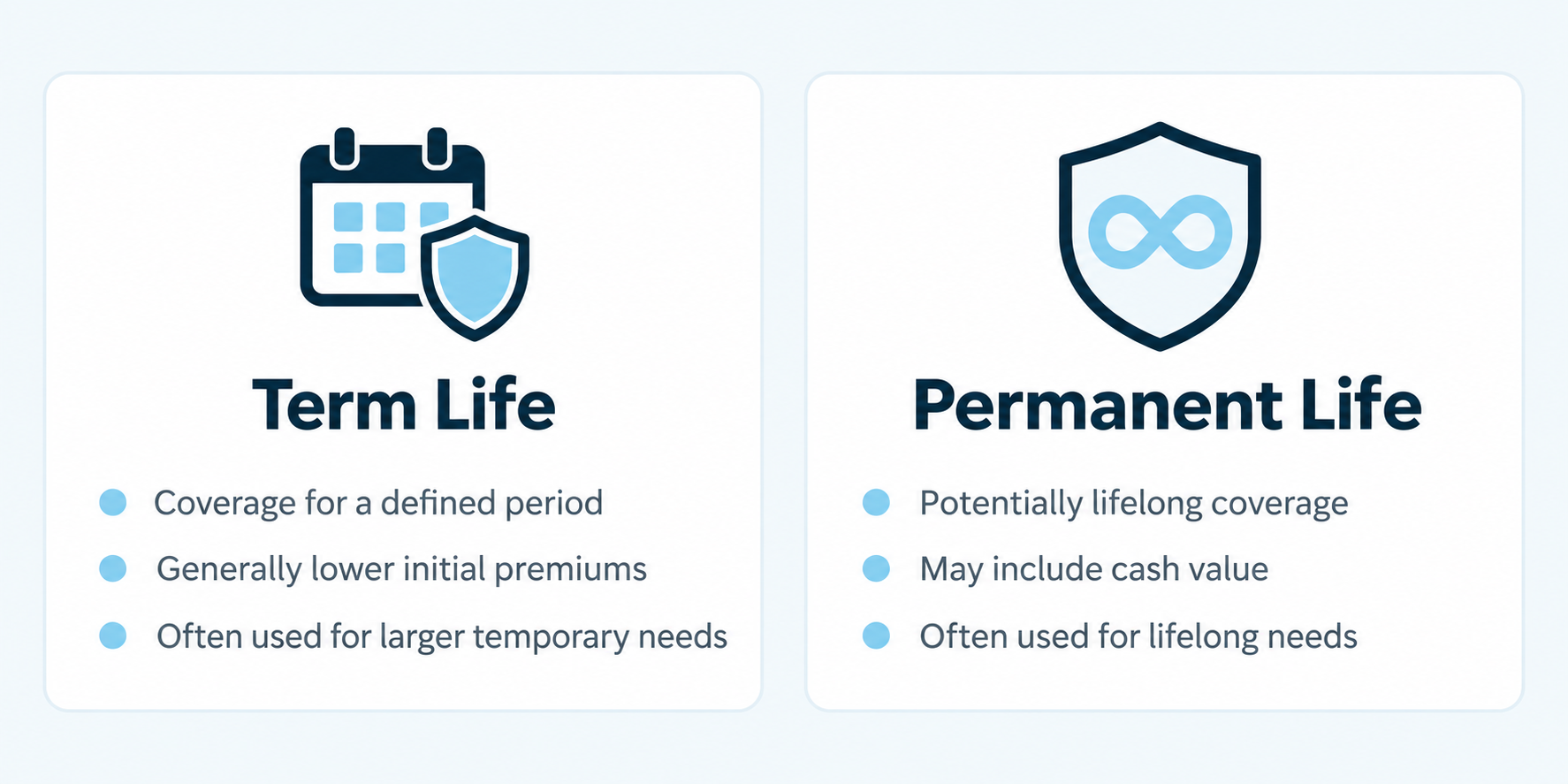
Term Life vs. Permanent Life Insurance
| Feature | Term Life | Permanent Life |
| Coverage duration | A defined period | Potentially lifelong |
| Initial premium | Lower | Higher |
| Cash value | Usually none | May accumulate cash value |
| Common use | Income, mortgage, children, debt | Legacy, final expenses, lifelong obligations |
| Premium structure | Usually level for the selected initial term | Depends on policy type and guarantees |
| Policy complexity | Simpler | May require more explanation and monitoring |
Term life may fit when:
- You need a larger death benefit on a limited budget
- Your needs have a defined timeline
- Income replacement is the primary objective
Permanent insurance may fit when:
- The need is expected to last for life
- You want final-expense or legacy protection
- Cash-value features support an appropriate long-term objective
- You can sustain the required premium
Some people use a layered strategy—for example, a larger term policy for temporary family needs and a smaller permanent policy for lifelong expenses.
Compare Term and Permanent Coverage
Is Your Workplace Life Insurance Enough?
Employer-provided life insurance can be valuable, but review:
- The actual death-benefit amount
- Whether optional coverage becomes more expensive with age
- Whether coverage ends when you leave the job
- Whether it can be converted or continued
- Whether the benefit is enough for your mortgage, income, and dependents
- Whether your beneficiary information is current
Workplace coverage should be included as a resource in your calculation, but relying on it exclusively may leave a gap if you change jobs, retire, or lose eligibility.
An individually owned policy can remain with you regardless of where you work, provided the policy stays in force.
What If the Recommended Amount Is Outside Your Budget?
An estimate is useful, but coverage also needs to be affordable enough to maintain. If the full amount is outside your budget, consider:
- Protecting the highest-priority needs first
- Choosing term coverage for larger temporary obligations
- Combining term and permanent policies
- Comparing more carriers
- Adjusting the term length
- Starting with manageable coverage and reviewing it later
- Removing optional riders that do not support your primary goal
Some appropriate coverage is more useful than an unaffordable policy that cannot be maintained. Never select a premium that interferes with essential household expenses.
Find Coverage Within My Budget
From Estimate to Coverage in Three Steps
1. Calculate your starting range
Review your income, debts, dependents, future goals, existing insurance, and available resources.
2. Compare available policies
Life Insured By Chris compares options from multiple carriers based on your age, health, state, desired coverage, and budget.
3. Choose with confidence
You review the policy type, premium, term, benefits, exclusions, and underwriting requirements before deciding whether to apply.

Why Work With Life Insured By Chris?
An online calculator can provide a starting estimate. It cannot evaluate your health, compare carrier underwriting, explain policy provisions, or determine whether a quote is realistically available. Christopher Franklin helps you:
- Calculate a practical coverage range
- Identify the appropriate protection period
- Compare term and permanent options
- Review more than 30 insurance carriers
- Understand medical and no-exam underwriting
- Compare premiums, riders, and limitations
- Complete the application accurately
- Review the final underwriting offer
- Receive support after the policy is issued
Life Insured By Chris is an independent brokerage. Recommendations are not limited to one insurance company.
Frequently Asked Questions
Is 10 times my income enough life insurance?
It may be a useful shortcut, but it does not account for every household’s debts, dependents, education goals, savings, existing coverage, or time horizon. A needs-minus-resources calculation provides a more individualized starting point.
Should both spouses have life insurance?
Consider the financial effect of either spouse’s death. A spouse who does not earn outside income may still provide childcare, household management, transportation, or caregiving services that would be expensive to replace.
How much life insurance does a stay-at-home parent need?
Estimate the cost of replacing childcare, transportation, household work, and caregiving for the years those services would be needed. Also consider whether the surviving parent would need to reduce working hours.
Should my policy equal my mortgage balance?
Not necessarily. Some families want enough to pay off the mortgage, while others need several years of payments plus income replacement. The beneficiary may also have priorities beyond the home.
Should I subtract savings from my coverage need?
Subtract assets specifically available for family protection. Be cautious about counting retirement accounts, the family home, emergency reserves, or business assets that survivors may not want or be able to liquidate.
Should I include workplace life insurance?
Yes, but verify whether the coverage is portable, how long it remains active, and whether the amount can change. Individually owned coverage is not tied to your employer.
How much coverage can I qualify for?
Carriers consider financial justification as well as age, health, occupation, income, existing insurance, and the purpose of coverage. The amount requested is not automatically the amount an insurer will approve.
Does more coverage always cost more?
A larger death benefit increases the premium. However, pricing is also affected by age, health, tobacco use, term length, policy type, underwriting class, riders, and state.
Should I buy term or whole life insurance?
Term insurance is commonly used for larger temporary needs, while whole life and other permanent policies may address lifelong needs. The right choice depends on the purpose, duration, budget, guarantees, and features required.
How often should I review my coverage?
Review it after major changes such as marriage, divorce, a birth or adoption, buying a home, changing jobs, starting a business, taking on debt, becoming a caregiver, or experiencing a significant income change.
Will I need a medical examination?
It depends on the carrier, product, coverage amount, age, and application. Some policies use accelerated or simplified underwriting, while others require medical records, laboratory testing, or a paramedical examination.
Is the coverage review free?
Yes, Life Insured By Chris offers a complimentary initial coverage review with no obligation to purchase.

Turn Your Estimate Into a Personalized Coverage Strategy
You do not need a perfect number before speaking with an independent broker. Start with your family’s most important needs, and we will help you compare policy amounts, terms, and carriers.
Schedule a free 15-minute review to see what coverage may be available based on your age, health, state, goals, and budget.
Or call or text (202) 641-5953
Monday–Friday, 8:00 AM–5:00 PM Eastern Time
Saturday appointments available by request
Life Insured By Chris is an independent insurance brokerage and is not owned by, operated by, or exclusively affiliated with any insurance company. Calculations and examples on this page are educational estimates only and do not constitute financial, legal, or tax advice. Product availability, premiums, underwriting, coverage amounts, policy features, and approval vary by carrier, state, and applicant. Coverage is not effective until approved by the issuing carrier, all delivery requirements are satisfied, and any required premium is received.
| Book My Free Coverage Review: In 15 minutes, we'll compare your options across 30+ carriers and tell you exactly what you qualify for and what it costs? → Visit: www.lifeinsuredbychris.com/schedule-a-consultation |