Life Insurance Beneficiary Mistakes to Avoid Early
A life insurance policy can look simple on the surface. You pick a coverage amount, choose a policy type, and make payments. Yet one of the most important choices often gets the least attention: the beneficiary designation.
That small section of the application carries real weight. If it is outdated, incomplete, or written too loosely, the death benefit may go somewhere you never intended. Families then must deal with delays, disputes, and avoidable stress during a difficult period.
A smart move is to treat your life insurance beneficiary the same way you treat the policy itself: as something that deserves review, not a one-time task.
Why life insurance beneficiary designations carry so much weight
Many people assume their will controls every asset after death. Life insurance usually works differently. Beneficiary designations direct where the policy proceeds go, even if your will say something else.
That point matters more than most people realize. A policy purchased years ago may still name a former spouse, a parent, or just one child when the goal now is very different. Consumer guidance from FINRA and the NAIC has stressed that beneficiary forms often remain effective through major life changes unless the policy owner updates them.
In other words, old paperwork can override newer intentions.
A properly named beneficiary can also help keep the payout outside probate. That often means a faster, more direct transfer to the intended person or people. If the beneficiary setup is unclear, missing, or routed to the estate without a clear reason, the result may be slower and more complicated.
Common life insurance beneficiary mistakes after major life events
The most common mistake is not reviewing your designation after life changes. People update home addresses, tax withholding, and emergency contacts, yet the beneficiary form stays untouched for years.
The NAIC has advised policy owners to check beneficiary listings at least annually and revisit them after major life events. That timeline is sensible because normal events often create beneficiary errors, not neglect.
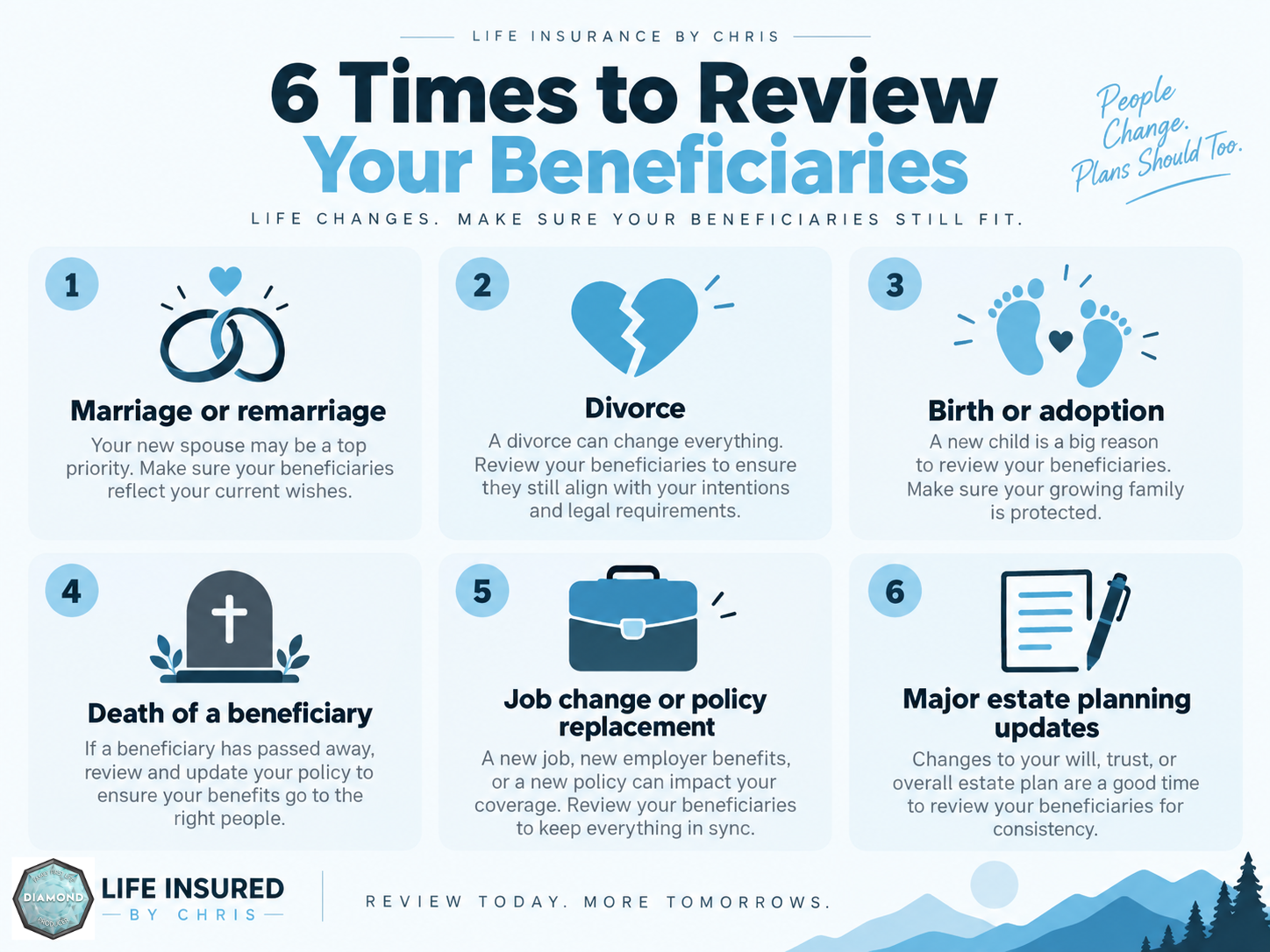
Review points worth treating as automatic include:
- Marriage or remarriage: confirm whether a spouse should be primary beneficiary
- Divorce: remove or revise a former spouse if that matches your intent
- Birth or adoption: decide whether children should be added directly or through a trust
- Death of a beneficiary: replace that person and name backups
- Job change or policy replacement: check that every active policy reflects the same plan
- Major estate planning updates: make sure policy forms match the broader plan
A second mistake is assuming one policy means one beneficiary. Many policies allow multiple primary beneficiaries and one or more contingent beneficiaries. If you want proceeds split among several people, your form should say that clearly with percentages.
A third mistake is leaving contact details incomplete. Insurers commonly request full legal names, dates of birth, Social Security numbers or tax identification numbers, and current contact information. Accurate identification helps reduce claim delays and confusion.
Primary beneficiary and contingent beneficiary choices compared
A primary beneficiary is first in line to receive the death benefit if that person is alive at the insured’s death. A contingent beneficiary receives the proceeds if the primary beneficiary dies first or cannot accept the payout.
That backup role is more important than it sounds. Without a contingent beneficiary, the policy proceeds may end up payable to the estate in some situations, which can pull the money into probate and slow access for family members.
Here is a simple comparison of common beneficiary approaches:
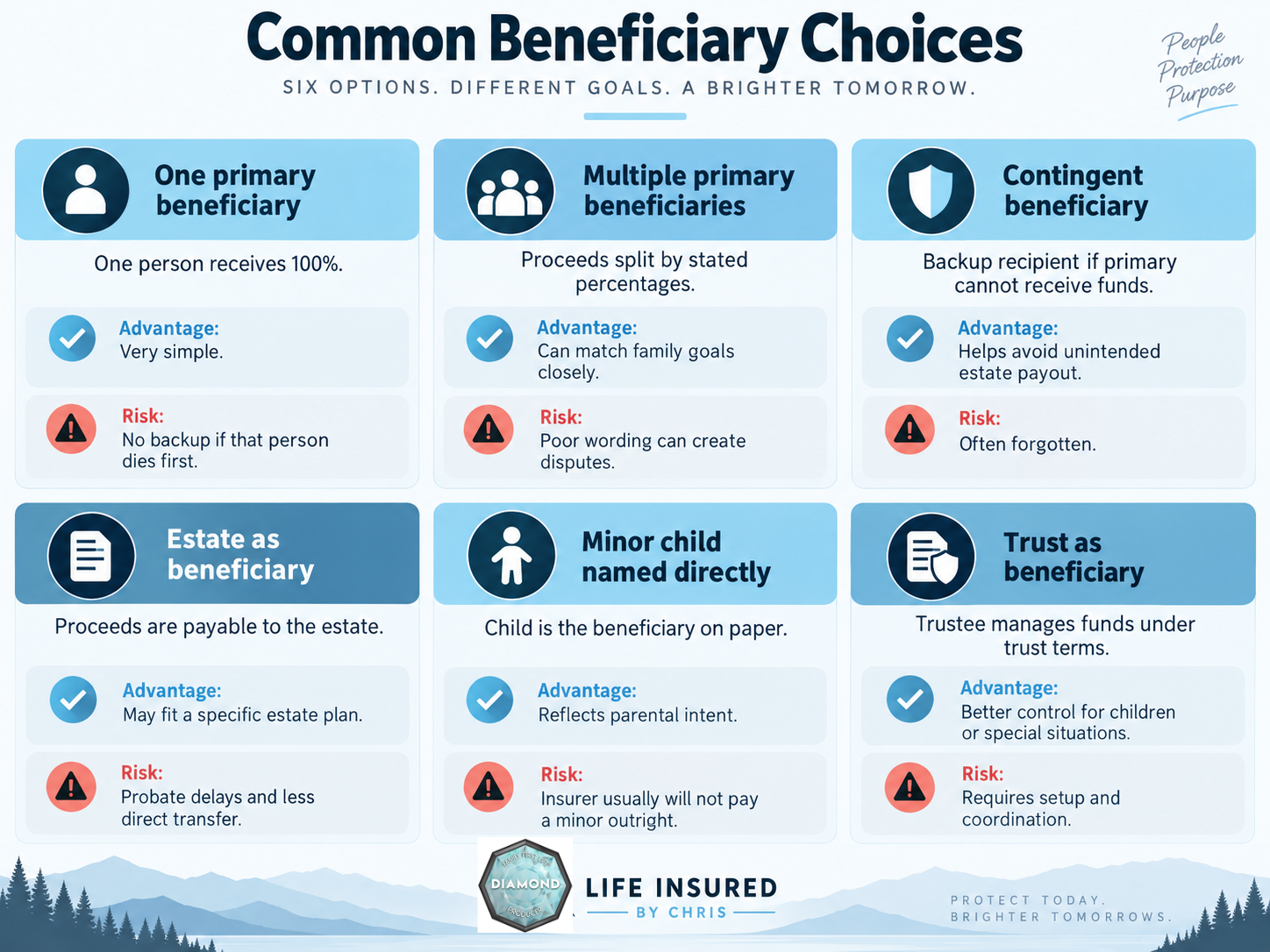
A clean structure often includes both primary and contingent beneficiaries. That alone can prevent many avoidable problems.
Why outdated life insurance beneficiary forms create the biggest problems
Outdated beneficiary forms are common because life moves faster than paperwork. A policy bought before marriage may still name a sibling. A policy purchased during a first marriage may still name that spouse decades later. A parent may intend to divide proceeds among all children, yet the form still lists only the oldest child from years ago.
These are not unusual cases. They are the quiet administrative mistakes that create the most painful surprises.
The problem becomes even sharper after divorce. Some people believe a divorce decree automatically changes every beneficiary designation. Often it does not. State law can affect the outcome, and policy language matters, but relying on assumptions is risky. The safer step is direct action: update the form, confirm the insurer accepted it, and save a copy.
This is also why keeping one policy updated is not enough if you own several. Group life insurance through work, an individual term policy, a final expense policy, and an older whole life policy may all have different beneficiary designations.
Why naming a minor child directly is risky
Parents often want life insurance proceeds to go to their children. That goal makes sense. The issue is the method.
Most insurers will not pay life insurance proceeds directly to a minor. NAIC consumer guidance has pointed this out clearly. If a minor is named outright, the payout may require a court-appointed guardian or another legal process before funds can be managed on the child’s behalf.
That can add delay, cost, and less control over how the money is handled.
Better options may include a trust, a testamentary trust created through a will, or another legally valid arrangement that places an adult or trustee in charge of the funds for the child. The right structure depends on the child’s age, family situation, and the size of the benefit.
If the goal is to protect children, the beneficiary form should not stop at their names. It should also answer who will manage the money and under what rules.
Beneficiary wording that can change payout results
Small wording choices can reshape the outcome in a major way. This is where many people need more care than they expect.
A beneficiary should usually be listed by full legal name, along with identifying details requested by the insurer. Nicknames, partial names, and vague labels like “my children” can lead to uncertainty, especially in blended families, adoptions, or cases where a child dies before the insured.
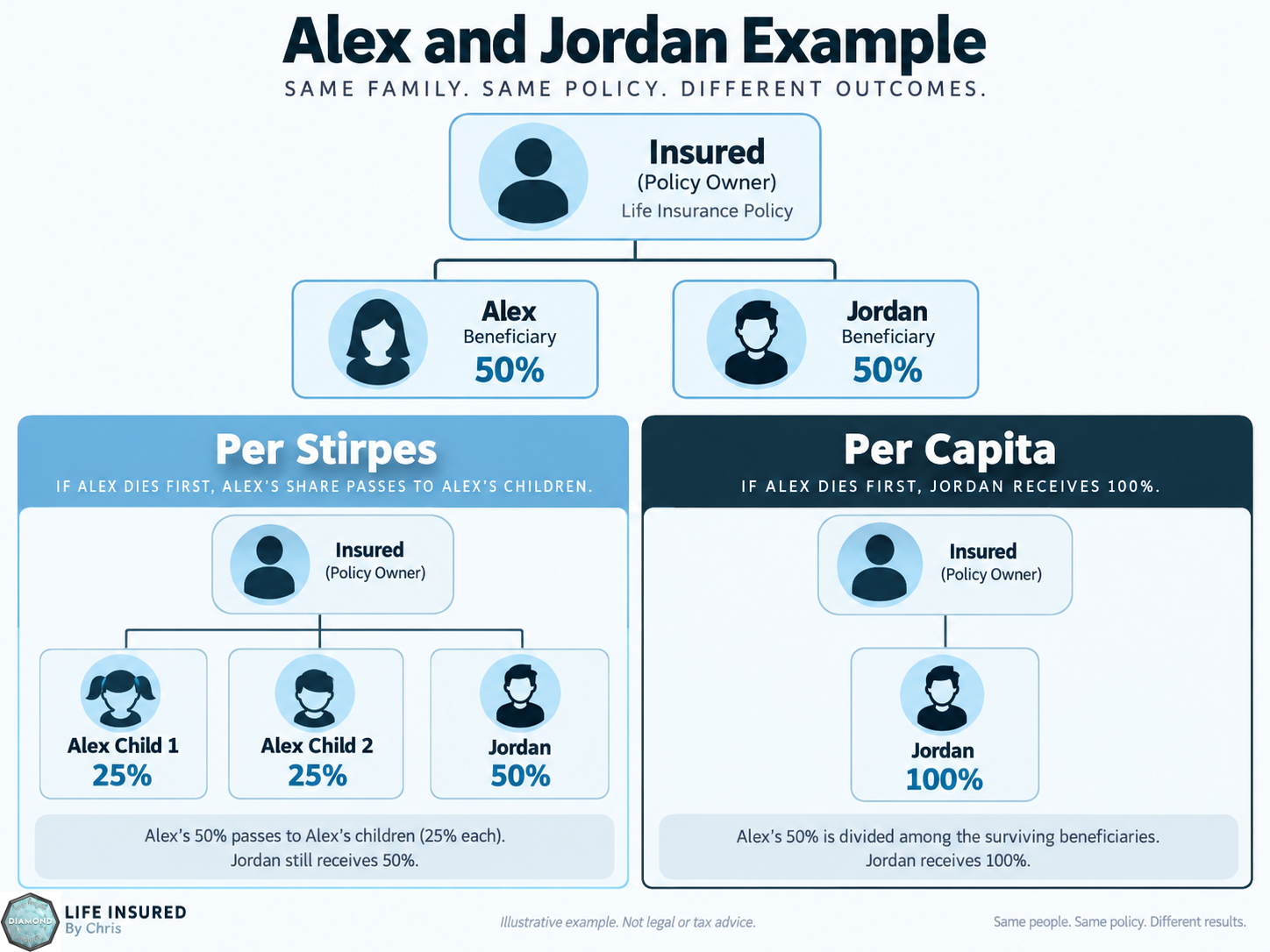
The terms *per stirpes* and *per capita* matter too. They are not decorative legal phrases. They affect who inherits if one beneficiary dies before you.
- Per stirpes: a deceased beneficiary’s share passes down that person’s line of descendants
- Per capita: the surviving named beneficiaries at the same level split the proceeds equally
- Full legal names
- Exact percentage allocations
- Current addresses and identification details
Take a simple example. Suppose a policy names two children, Alex and Jordan, at 50% each. If Alex dies before the insured and the designation is per stirpes, Alex’s children may receive Alex’s share. If the designation is per capita, the surviving beneficiary, Jordan, may receive the full amount. Same family, same policy, very different outcome.
That is why precise wording is not just a technical detail. It is part of the financial plan.
When naming your estate as beneficiary can create probate issues
Some people name their estate as beneficiary because it feels orderly. In some cases, that can be intentional and reasonable. A person may want the proceeds used to cover debts, equalize inheritances, or support a larger estate plan.
Still, this should be a deliberate choice, not a default setting.
When the estate receives the death benefit, the proceeds may go through probate before distribution. Probate can slow access to the money and expose the transfer to court procedures that a direct beneficiary designation might have avoided. Depending on the situation, naming the estate can also affect creditor access and other tax or estate planning issues.
This is one area where life insurance and estate planning need to match.
If the policy is meant to give immediate support to a spouse, children, or another loved one, naming the estate may work against that goal. If the policy is meant to fund obligations of the estate, then the choice may fit. The key is clarity.

A simple life insurance beneficiary review process
Reviewing a beneficiary designation does not need to take long. It just needs to be done carefully and repeated at the right times.
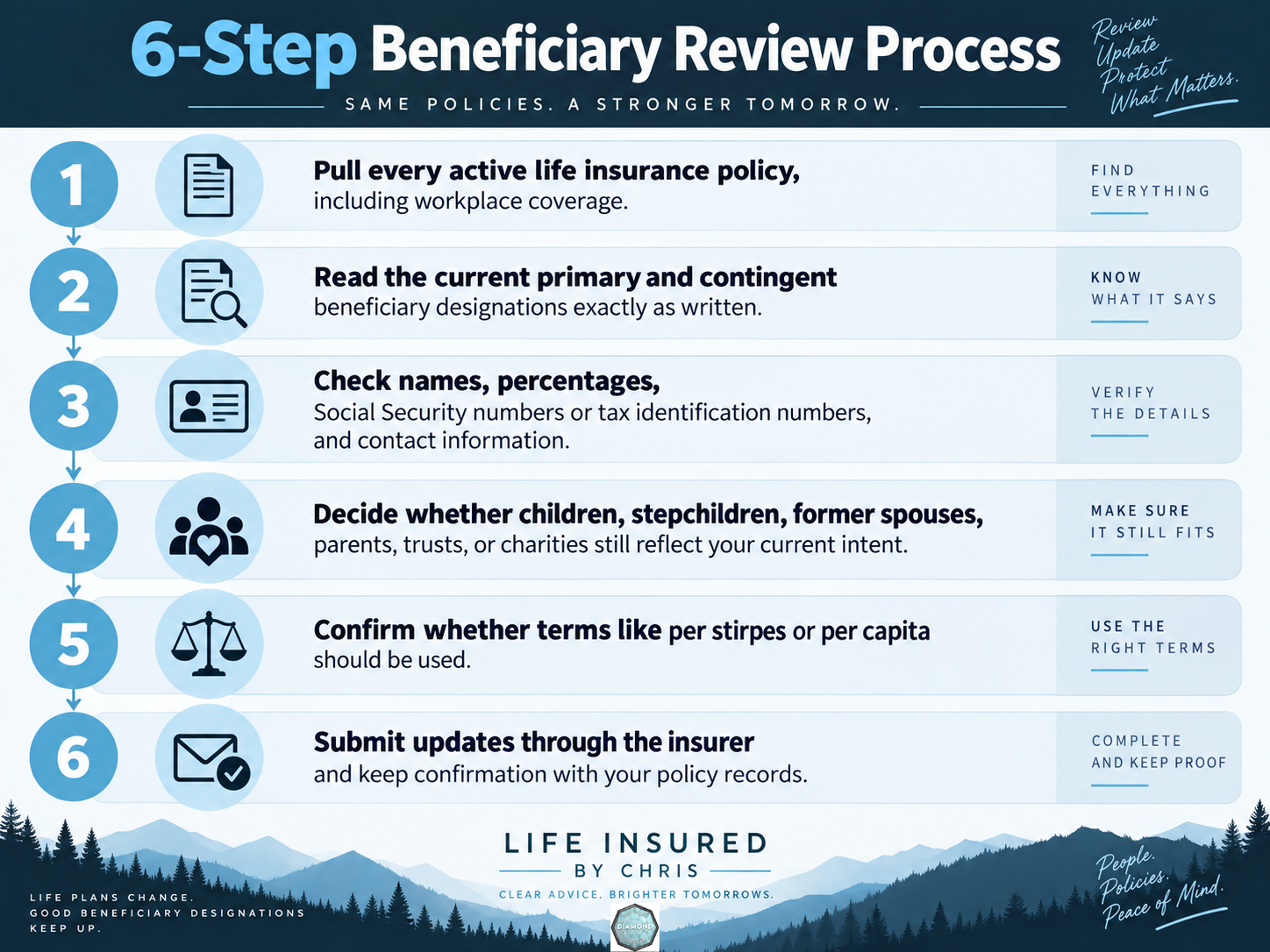
A strong process looks like this:
- Pull every active life insurance policy, including workplace coverage.
- Read the current primary and contingent beneficiary designations exactly as written.
- Check names, percentages, Social Security numbers or tax identification numbers, and contact information.
- Decide whether children, stepchildren, former spouses, parents, trusts, or charities still reflect your current intent.
- Confirm whether terms like per stirpes or per capita should be used.
- Submit updates through the insurer and keep confirmation with your policy records.
It also helps to make sure at least one trusted person knows the policy exists. The NAIC has noted that beneficiaries should know about the policy or be reachable through a trusted advisor. Benefits cannot help anyone if no one knows where to file the claim.
For many households, the best time to review beneficiaries is during an annual insurance checkup, open enrollment at work, or right after a major family event. Early attention is what prevents late surprises.
Getting life insurance beneficiary details right from the start
A beneficiary designation is not filler at the end of an application. It is the instruction set for the policy’s payout.
That is why early decisions matter so much. Choosing a primary beneficiary without naming a contingent beneficiary, listing a minor child directly, using vague wording, or forgetting to update an old form can change the result in ways no one wanted.
A careful review now can protect the people the policy was meant to support, keep the claim process cleaner, and make the benefit far more likely to reach the right hands at the right time.

| Ready to compare your options? Reach out to Life Insured By Chris to review your life insurance options and get matched with coverage that fits your timeline, your budget, and the people you want to protect. → Visit: www.lifeinsuredbychris.com/schedule-a-consultation |