Best Life Insurance Companies in 2026: Carrier Scorecard and How to Choose
Shopping for life insurance in 2026 can feel confusing for a simple reason: most people are not comparing one product, they are comparing dozens of moving parts. Term length, underwriting class, conversion options, riders, living benefits, cash value design, and carrier specific rules can change the outcome as much as the price. The good news is that you do not need a finance degree to pick well. You need a clear scorecard and a process that matches the policy type to your goal.
This guide is written as a comparison and review article. It highlights a shortlist of widely recognized life insurance carriers, explains what each tends to do well, and gives you a practical carrier scorecard you can use to narrow your options. It is not a quote and it is not a promise of coverage. Availability, pricing, and underwriting outcomes vary by state, age, health, and the details of the application.
What Changed in the Life Insurance Market Heading Into 2026?
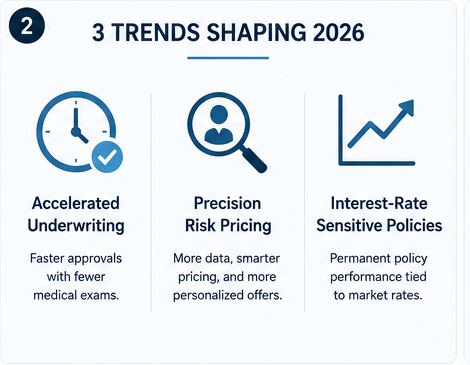
Three trends matter most for consumers in 2026. First, more companies lean on accelerated underwriting, which can reduce or eliminate medical exams for many applicants, but eligibility rules differ by carrier. Second, carriers have become more precise about risk, so small health details, medications, nicotine use, driving history, and build can shift pricing significantly. Third, permanent life policies remain sensitive to interest rate assumptions and internal policy charges, so the design and illustration matter as much as the company name.
Because of these trends, the best carrier for your neighbor may be a poor fit for you, even if you look similar on paper. That is why a scorecard approach works better than chasing a single brand.
Quick Definitions: The Main Policy Types You Will See in 2026
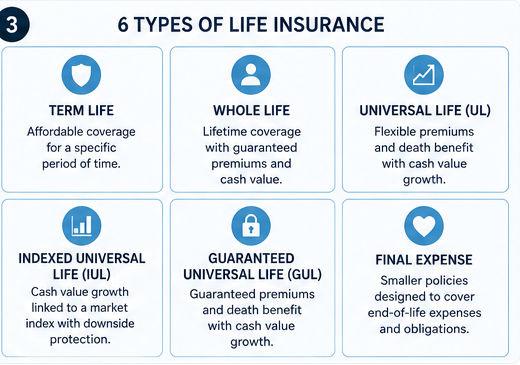
- Term life insurance: coverage for a set period, often 10 to 30 years. Typically, the lowest cost for a given death benefit.
- Whole life insurance: lifelong coverage with guaranteed premiums and cash value, plus dividends if issued by a mutual company.
- Universal life (UL): flexible premium permanent insurance where cash value performance depends on credited interest and charges.
- Indexed universal life (IUL): a form of UL where interest credits are linked to an index with caps and floors, subject to policy charges and carrier options.
- Guaranteed universal life (GUL): permanent coverage focused on guarantees, usually minimal cash value, designed to keep coverage in force to a target age.
- Final expense: smaller face amounts meant to cover burial and end-of-life costs, commonly simplified underwriting.
How to Read a Carrier Scorecard: What Actually Matters
A good scorecard prevents you from choosing a carrier based only on price or name recognition. You want a company that is strong financially, competitive for your specific underwriting profile, and well aligned with the product you are buying. Term buyers should care about conversion, renewal pricing, and how long the conversion window stays open. Permanent buyers should care about policy charges, contract guarantees, loan provisions, and illustration discipline.
The 2026 carrier scorecard categories
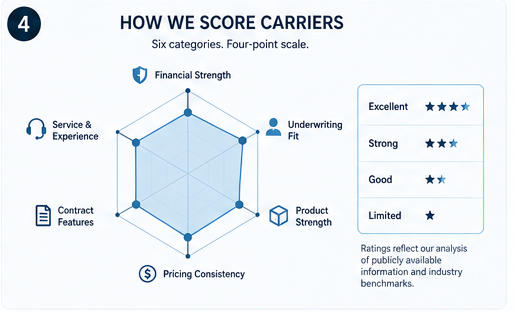
The scorecard below uses six categories. You can grade each carrier as Excellent, Strong, Good, or Limited for your needs.
- Financial strength and stability: ratings from agencies, capitalization, and long-term claims paying history.
- Underwriting fit: how the carrier tends to treat common conditions, build charts, prescriptions, and lifestyle risks.
- Product strength: how good the carrier is in the policy type you want, not just overall.
- Pricing consistency: competitiveness across ages and terms, plus rate stability over time.
- Contract features and riders: conversion options, living benefits, chronic illness riders, waiver riders, and flexibility.
- Service and experience: application tools, policy delivery, beneficiary support, and claims responsiveness.
Carrier Scorecard and 2026 Shortlist: Who Tends to be Best for What
The carriers below are commonly considered top contenders in the US life insurance market. The scorecard notes broad tendencies, not guarantees. Always confirm current financial ratings and product details at the time you apply.
Royal Neighbors of America
- Financial strength and stability: Strong, with a long history as a fraternal benefit society and a member-focused operating model.
- Product strength: Good to Strong across term, whole life, and other protection-focused products, with an emphasis on accessible life insurance solutions.
- Tradeoffs: Product availability and underwriting fit can vary by state, age, health profile, and product.
- Best for: Buyers who value a member-focused organization and want to compare traditional life insurance options alongside other carriers.
Simply Better Life Insurance
- Financial strength and stability: Simply Better Life Insurance is primarily a distribution and insurance solutions platform rather than a traditional life insurance carrier, so financial strength should be evaluated based on the underlying insurance company issuing the policy.
- Product strength: Can provide access to life insurance solutions designed around different consumer needs, depending on the carrier and product available.
- Tradeoffs: The actual policy features, pricing, underwriting, and financial strength depend on the underlying insurance carrier rather than the Simply Better platform itself.
- Best for: Shoppers who want help comparing available life insurance solutions and are comfortable evaluating the actual carrier behind the policy.
Ethos Life Insurance
- Financial strength and stability: Strong through its partnerships with established insurance carriers; Ethos itself operates primarily as a technology-enabled life insurance platform rather than as the insurer issuing every policy.
- Product strength: Strong for simplified, digitally oriented term and whole life purchasing experiences, with an emphasis on streamlined applications.
- Tradeoffs: The simplified application process does not necessarily mean every applicant will qualify, and available products, coverage amounts, and underwriting can vary.
- Best for: Consumers who prioritize a convenient online application experience and want to explore life insurance with less traditional paperwork.
InstaBrain
- Financial strength and stability: InstaBrain is better understood as a life insurance distribution or technology platform rather than a traditional insurance carrier, so the financial strength of the underlying insurer should be evaluated.
- Product strength: Can provide access to life insurance solutions through carrier relationships, depending on the applicant's state and profile.
- Tradeoffs: Product availability, underwriting, pricing, and policy guarantees ultimately depend on the underlying insurance company.
- Best for: Consumers looking for a streamlined insurance-shopping experience and advisors comparing multiple carrier solutions.
American Home Life Insurance Company
- Financial strength and stability: Strong niche-market presence, with a long history serving specific life insurance and final expense markets.
- Product strength: Often considered for simplified issue, final expense, and other smaller-face-amount life insurance needs, depending on eligibility and state availability.
- Tradeoffs: Product selection is more specialized than some of the largest national carriers, so it may not be the ideal fit for every term or permanent insurance objective.
- Best for: Consumers looking for smaller amounts of permanent coverage, particularly those comparing final expense and simplified underwriting options.
Liberty Bankers Life Insurance Company
- Financial strength and stability: Strong niche-market presence, particularly within the senior and final expense insurance space.
- Product strength: Often competitive in final expense, simplified issue, and other permanent life insurance solutions designed for consumers seeking smaller face amounts.
- Tradeoffs: Its product lineup is more specialized, and underwriting and availability can vary depending on the applicant and state.
- Best for: Seniors and families looking for final expense protection, simplified underwriting, and affordable permanent coverage options.
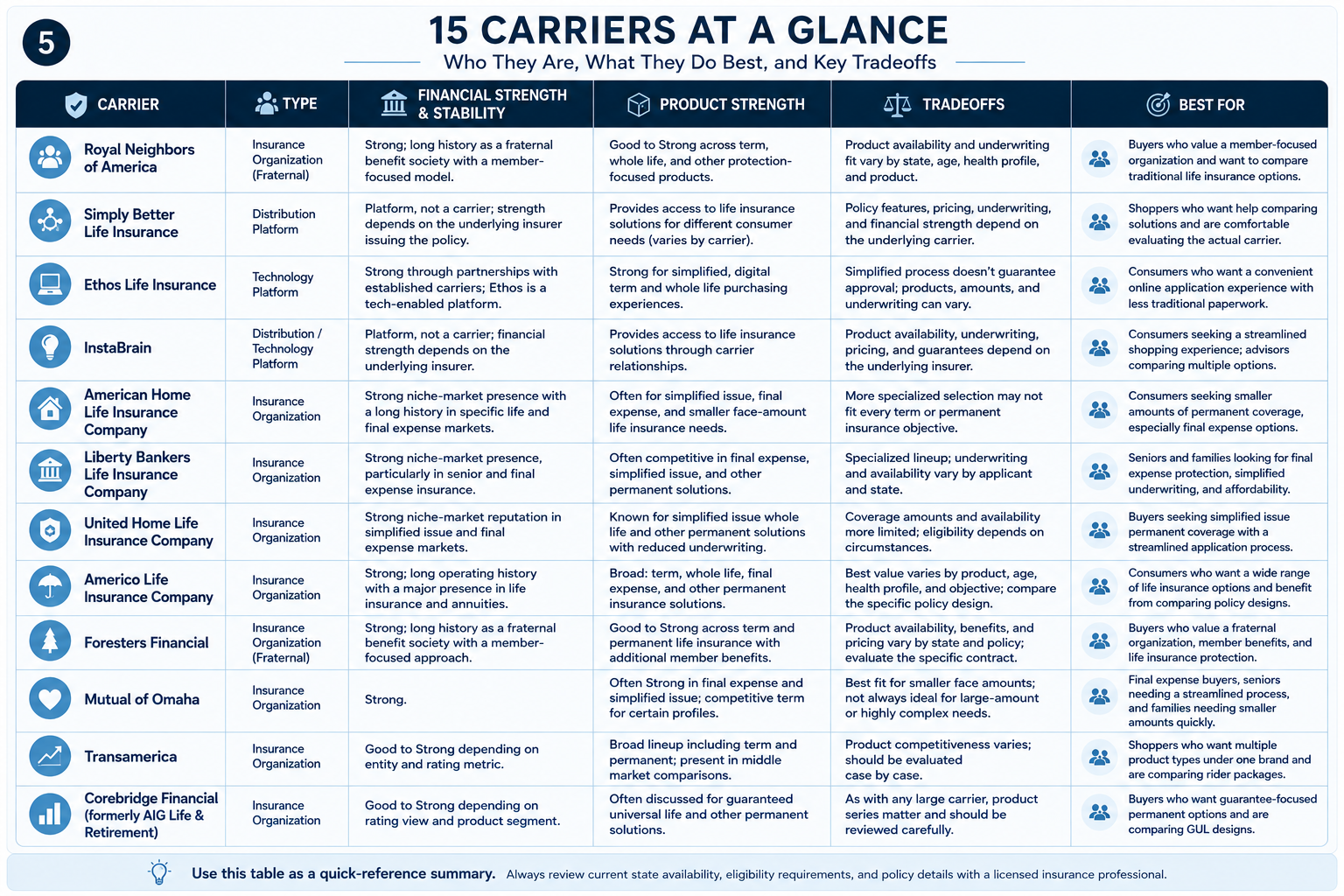
United Home Life Insurance Company
- Financial strength and stability: Strong niche-market reputation, particularly in the simplified issue and final expense markets.
- Product strength: Often known for simplified issue whole life and other permanent insurance solutions, including options designed to reduce traditional underwriting requirements.
- Tradeoffs: Coverage amounts and product availability are more limited than with some large national carriers, and eligibility depends on the applicant's circumstances.
- Best for: Buyers seeking simplified issue permanent coverage, particularly individuals who may prefer a streamlined application process.
Americo Life Insurance Company
- Financial strength and stability: Strong, with a long operating history and a significant presence in the life insurance and annuity markets.
- Product strength: Broad, with products spanning term, whole life, final expense, and other permanent insurance solutions depending on state and eligibility.
- Tradeoffs: The best value can vary considerably by product, age, health profile, and coverage objective, so comparing the specific policy design is important.
- Best for: Consumers who want a broad range of life insurance options, including final expense and permanent coverage, and who benefit from comparing multiple policy designs.
Foresters Financial
- Financial strength and stability: Strong, with a long history as a fraternal benefit society and a member-focused approach.
- Product strength: Good to Strong across term and permanent life insurance, with additional member benefits and features available on qualifying products.
- Tradeoffs: Product availability, benefits, and pricing can vary by state and policy, so the specific contract should be evaluated rather than relying solely on the organization's broader reputation.
- Best for: Buyers who value a fraternal organization, member-oriented benefits, and a combination of life insurance protection and additional policyholder features.
Mutual of Omaha
- Financial strength and stability: Strong.
- Product strength: Strong in final expense and simplified issue markets, plus competitive term for certain profiles.
- Service and experience: Commonly used for quick issue workflows in the senior market.
- Best for: Final expense buyers, seniors who want a streamlined process, and families needing smaller face amounts quickly.
Transamerica
- Financial strength and stability: Good to Strong depending on the specific entity and rating metric.
- Product strength: Broad lineup including term and permanent, often present in middle market comparisons.
- Tradeoffs: Product competitiveness varies, so it should be evaluated case by case.
- Best for: Shoppers who want multiple product types under one brand and are comparing rider packages.
Corebridge Financial, formerly AIG Life and Retirement
- Financial strength and stability: Good to Strong depending on the rating view and product segment.
- Product strength: Often discussed for guaranteed universal life and certain permanent solutions.
- Tradeoffs: As with any large carrier, product series matter and should be reviewed carefully.
- Best for: Buyers who want a guarantee focused permanent option and are comparing GUL designs.
How to Choose the Best Life Insurance Company for You in 2026
Instead of asking, what is the best company, ask, what is the best company for this exact goal, at this exact budget, with this exact health profile. Use the steps below to avoid common mistakes.
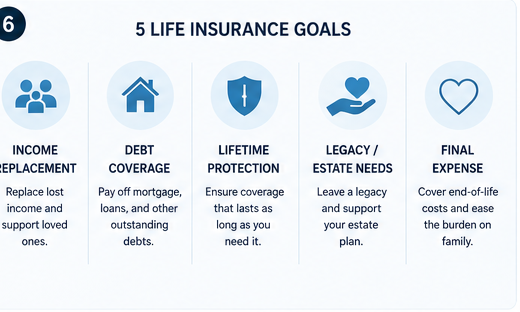
Step 1: Pick the job your policy must do
- Income replacement: Usually term life with a benefit sized to replace income for a period.
- Debt coverage: Term aligned to mortgage length or other liabilities.
- Lifetime protection: Whole life, GUL, or a carefully funded UL depending on priorities.
- Legacy and estate needs: Permanent coverage often paired with legal and tax planning.
- Final expense: Simplified issue whole life or small permanent policies.
Step 2: Decide how much underwriting friction you can tolerate
If you are healthy and want the best price, full underwriting may be worth it. If speed matters more, a no exam or accelerated underwriting option may be a better experience, even if the premium is slightly higher. For certain conditions, a carrier that is more favorable to your medical history can beat a no exam option by a wide margin.
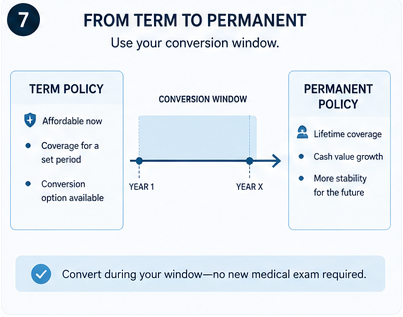
Step 3: Compare conversion options if you are buying term
In 2026, term life is often purchased with the idea that you can convert part or all of it later if health changes. Conversion is not identical across carriers. Key questions include:
- How long is the conversion window, and does it end early for certain term lengths?
- Which permanent products are eligible for conversion at the time you convert?
- Is conversion level or does the new premium depend on current permanent rates?
- Are there conversion credits or special conversion products?
Step 4: For permanent policies, insist on a design review, not a brochure
Permanent life can be excellent, but it is easy to buy the wrong version. If you are considering whole life, ask how the base policy and paid up additions are structured and what happens if you stop over funding. If you are considering IUL, ask for stress tested illustrations, including lower crediting assumptions, and review charges, caps, participation rates, and loan provisions. A strong carrier cannot rescue a poorly designed policy.
Step 5: Use a practical scorecard and narrow to 2 or 3 finalists
Once you know the policy type, score carriers for your situation. An example grading approach looks like this.
- Financial strength: Require Strong or Excellent for most long term needs.
- Underwriting fit: Prioritize carriers known to be reasonable for your specific conditions, prescriptions, and build.
- Product match: Only compare carriers that are truly competitive in the product you want.
- Contract features: Ensure riders and conversion align with your plan.
- Service: Confirm application workflow and ongoing support.
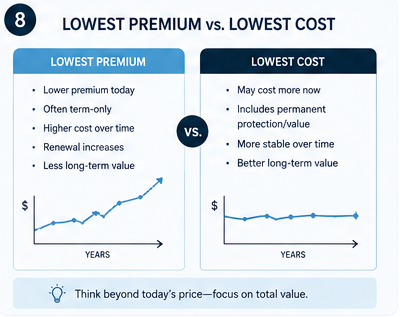
Step 6: Do not confuse lowest premium with lowest cost
For term insurance, the lowest premium is often a fine goal, but only after you confirm the carrier is strong and the policy includes the features you may need. For permanent insurance, the lowest initial premium can be misleading if it increases later or if the policy is under funded. Evaluate total outcomes, not only the first year price.
Common Mistakes When Comparing Life Insurance Companies
- Comparing different underwriting classes: One quote may assume Preferred and another Standard. The price comparison is meaningless unless classes match.
- Ignoring term conversion details: The conversion privilege can be the most valuable feature you never use until you need it.
- Buying permanent insurance without a funding plan: Cash value policies require deliberate premium strategy.
- Overbuying riders: Riders can be useful, but only if they match a clear need.
- Choosing a carrier based on ads: Brand recognition does not guarantee best fit for your health profile or product type.
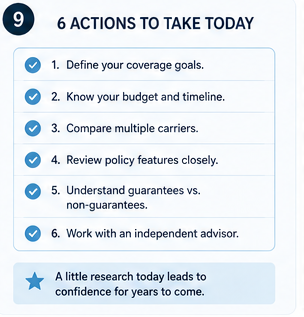
A Simple Checklist You Can Use Before You Apply
- Confirm the policy type and term length match the problem you are solving.
- Estimate the death benefit using income, debts, and family timeline, not a guess.
- List prescriptions, diagnoses, tobacco or nicotine use, and hazardous activities upfront.
- Choose 2 to 3 carriers that are strong in your product category and underwriting fit.
- Review conversion options, riders, and any living benefit features.
- Ask how long approval takes and what documents may be required.
How Life Insured By Chris Helps Shoppers Choose in 2026
Life Insured By Chris was founded in 2024 with a mission to bring clarity, choice, and confidence to life insurance decisions. Because Life Insured By Chris is licensed in multiple states and works with more than 30 A+ rated carriers, the process is built around fitting the carrier to the client, not fitting the client to one company. That makes it easier to compare term, whole life, universal life, and final expense options side by side using a consistent scorecard.
If you want help applying the 2026 scorecard to your exact situation, the most efficient approach is usually to start with your goal, timeline, and health profile, then narrow carriers to a short list and request quotes that use the same assumptions. That way you can make a confident decision based on comparable information, not marketing noise.

The best life insurance companies in 2026 are the ones that align with your policy type, your underwriting profile, and your long term plan. Use a scorecard that prioritizes financial strength, underwriting fit, and contract features, then compare a few finalists rather than dozens of random quotes. With a rational process, you can turn an overwhelming market into a straightforward decision.
| Ready to compare your options? We'll shop more than 30 top-rated carriers to help you find the right life insurance, whether a no-exam policy or traditional underwriting is the better fit. → Visit: https://myagentisverified.com/Calendar/lifeinsuredbychris |