Best Term Life Insurance for Seniors: How to Choose Coverage and Compare Quotes
Best Term Life Insurance for Seniors: What Matters Most
For most seniors, the best term life insurance is the policy that matches the length of your financial need, fits your budget on a fixed income, and is issued by a highly rated carrier with clear, stable pricing. Term life insurance can be a smart way to protect a spouse, cover a remaining mortgage, replace pension or Social Security income for a period of years, or leave a predictable legacy without paying permanent life premiums.
When you compare quotes, focus on five things first: the monthly cost, the term length you can actually qualify for at your age, the health class you are likely to receive, the carrier financial strength ratings, and the underwriting path, meaning fully underwritten, simplified issue, or guaranteed issue. Get those right, and the rest becomes easier.
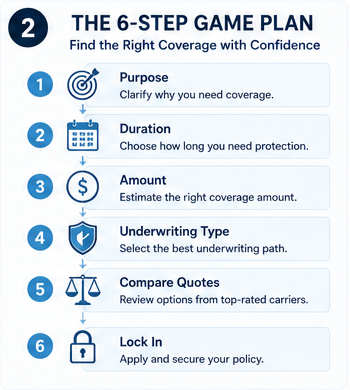
Quick Decision Guide: How to Choose Coverage in Minutes?
- Pick the purpose: Income replacement for a spouse, debt payoff, estate liquidity, or final bills and small legacy.
- Pick the duration: Choose a term that covers the need, often 10 or 15 years for ages 60 to 75, sometimes 20 years for healthy early 60s.
- Estimate the amount: Add debts and income needs, then subtract savings that will actually be used for that purpose.
- Choose underwriting type: Fully underwritten is usually cheapest if you can qualify, simplified issue can be faster with a higher cost, guaranteed issue is last resort and typically most expensive per dollar.
- Compare at least 10 to 15 quotes: Seniors often see big pricing differences between carriers for the same health profile.
- Lock in while you can: Age is a major price factor, and eligibility options can shrink each birthday.
Why Term Life Insurance for Seniors Can Still be a Great Fit?
It is common to assume life insurance is only for young families, but many people reach retirement with new or unfinished responsibilities. A spouse may depend on your pension, Social Security, or investment income. Adult children may not be able to help with final expenses. You may want to avoid selling assets in a down market to pay off a mortgage or medical bills. Term life insurance is designed for these time limited needs. You pay for coverage during the years you need it most, without the higher long term cost of permanent policies.
Term also works well when you want a clear, predictable plan. You choose a death benefit amount and a term length. If you pass away during the term, the policy pays the benefit to your beneficiary, generally income tax free. If you outlive the term, coverage ends unless you renew, convert, or replace it, depending on the policy rules.
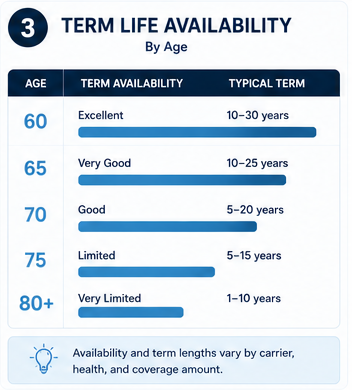
What Counts as Senior for Term Life Insurance?
Most insurers start using senior focused pricing and underwriting around age 60. Availability depends heavily on age and health. Many carriers offer term coverage into the mid 70s, and some will issue certain term products to older ages, but options typically narrow as you get closer to 80. The practical takeaway is that seniors should be realistic about term lengths. A 20 year term may be available at age 60 for a healthy applicant, while a 10 year term may be more common and more affordable in the late 60s and 70s.
How to Choose the Right Term Length: Match Coverage to the Problem
Start by naming the financial risk you are protecting against, then choose a term that lasts until that risk reasonably disappears. Choosing a term that is too long can overprice the solution. Choosing a term that is too short can leave your family exposed when premiums are higher and health is less predictable.
- Mortgage or rent support: Match the term to the years left on the mortgage or to the period a surviving spouse would need help with housing costs.
- Income replacement for a spouse: Many seniors choose 10 or 15 years to cover the years before a spouse reaches a more stable point with survivor benefits and savings.
- Debt payoff: If the goal is to eliminate a specific debt, choose a term that covers it with a small buffer.
- Bridge to retirement income: If you plan to delay Social Security or rely on a part time job for a few years, choose a term that covers that bridge period.
- Legacy for heirs: If the goal is a long lasting legacy, term can work, but consider whether a permanent policy may be better aligned if you want lifelong coverage.
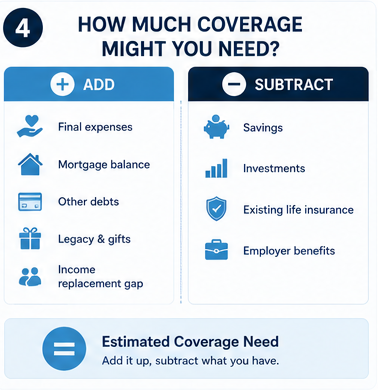
How Much Coverage a Senior Should Buy: A Practical Formula
Coverage amounts for seniors often fall into two buckets: a smaller amount to handle final expenses and short term bills, and a larger amount to protect a spouse or cover major debts. There is no universal number, but there is a reliable process.
Step 1: Add up obligations and goals
- Final expenses and medical bills not covered by insurance
- Mortgage or rent support, including property taxes and insurance
- Credit cards, auto loans, personal loans, and co signed obligations
- Any planned gifts or legacy amounts
- Income gap for a spouse, measured as monthly gap times the number of months you want to protect
Step 2: Subtract assets that will truly be used
- Cash savings earmarked for final expenses
- Investments you are willing to liquidate for this purpose
- Existing life insurance
- Veterans or employer benefits your beneficiary will actually receive
Step 3: Choose a round number you can keep
Once you have the estimate, choose a coverage amount that fits your budget with room to spare. For seniors, policy lapse is a real risk if premiums strain the monthly budget. A slightly smaller policy that you keep is better than a bigger policy that becomes unaffordable.
What Makes One Term Policy Better Than Another for Seniors?
Many term policies look similar, but small differences can matter more as you age. When comparing quotes, look beyond price and confirm these features in plain language.
- Level premium period: Ensure the premium is level for the full term length you are buying.
- Renewal pricing: Understand what happens after the term, even if you do not plan to renew. Renewal rates can jump sharply.
- Conversion option: Some policies allow conversion to permanent coverage without a new medical exam, which can be valuable if health changes.
- Living benefits or accelerated death benefit: Many policies include options to access part of the benefit for qualifying terminal or chronic illness, subject to rules and limitations.
- Policy fees: Confirm whether a monthly policy fee is included and how it affects total cost.
- Carrier strength: Prioritize insurers with strong financial ratings and a long history in the life market.
Underwriting for Seniors: How Your Health Affects Cost and Approval
Underwriting is the process the insurance company uses to evaluate risk and set your rate. For seniors, underwriting matters because small health details can move you from one rate class to another and significantly change the premium. The same person can receive different offers from different carriers because each company weighs conditions differently.
Common Senior Health Factors that Influence Term Life Quotes
- Blood pressure, medication count, and how well controlled it is
- Cholesterol and cardiac history
- Diabetes type, A1C levels, complications, and insulin use
- Sleep apnea and treatment compliance
- Cancer history, type, stage, treatment, and time since remission
- Build, meaning height and weight ratios
- Tobacco or nicotine use, including vaping and some nicotine replacement products
- Driving record, such as major violations
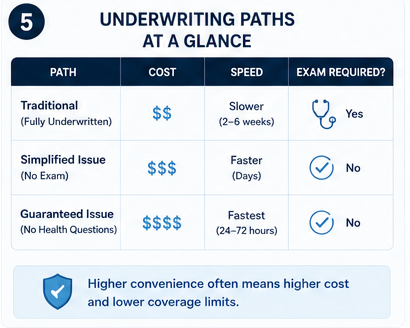
Three Underwriting Paths: Fully Underwritten, Simplified Issue, Guaranteed Issue
Fully underwritten term: Usually offers the lowest cost for seniors who qualify. It often includes a health questionnaire, prescription database check, medical records review, and sometimes a paramed exam with blood and urine. It can take days to a few weeks, depending on records.
Simplified issue term: Is designed to be faster and can avoid an exam, but it still asks health questions and uses database checks. It is often more expensive than fully underwritten coverage for the same face amount because the insurer is taking on more uncertainty.
Guaranteed issue: Typically does not require health questions, but it is usually a permanent style policy with smaller coverage amounts and higher cost per dollar. It may include a graded benefit period where full benefits are limited in the first years. It is usually not the best fit when your goal is affordable term coverage, but it can be a fallback if health prevents other options.
How to Compare Term Life Insurance Quotes for Seniors: Step By Step
Comparing quotes is not just collecting prices. It is matching your likely approval outcome to the best carrier for your profile. Here is a process that works well for seniors and avoids wasted applications.
- Step 1, Define the Target Policy: Choose term length, coverage amount, and whether you want conversion or living benefits.
- Step 2, Summarize Your Health Accurately: List conditions, medications with dosages, last doctor visit, and any hospitalizations.
- Step 3, Request a Range of Quotes: Include both exam and no exam options if speed matters.
- Step 4, Ask for a Realistic Rate Class Estimate: Your best price depends on the rate class you can qualify for, not the top advertised rate.
- Step 5, Verify Product Details: Level period, renewability, conversion deadlines, and included riders.
- Step 6, Apply Strategically: If your health is complex, consider an informal review or pre underwriting discussion before a formal application, when available.
- Step 7, Keep Your Application Consistent: Inconsistencies can delay approval and trigger extra documentation requests.
What to Ask When You Are Shopping Quotes?
- What rate class is this quote based on, and what would push me into a different class?
- Is the premium guaranteed level for the entire term, and is there any monthly policy fee?
- Does this policy include an accelerated death benefit, and what are the eligibility rules?
- Until what age can I convert, and what permanent products are available for conversion?
- What is the typical approval timeline for someone with my health history?
- How does this carrier treat my specific condition, for example controlled diabetes or prior cancer?
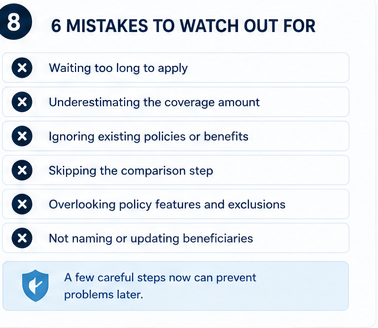
Common Mistakes Seniors Make With Term Life Insurance
Most problems come from choosing coverage based on price alone or guessing at health class. Avoid these common issues.
- Buying a term that ends too soon: Saving a few dollars now can create a much bigger problem later when coverage is harder to replace.
- Assuming the best advertised rate applies: The healthiest rate class is not typical for many seniors.
- Ignoring conversion options: Conversion can be valuable if you later decide you want coverage beyond the term.
- Overbuying coverage: A policy that strains the budget is more likely to lapse, especially on a fixed income.
- Waiting too long: Each birthday generally increases cost, and new diagnoses can reduce options quickly.
- Not disclosing health details: Omissions can delay underwriting and may create issues at claim time.
Best Term Life Insurance for Seniors: What to Look for in a Carrier?
Rather than naming a single company as best for everyone, it is more accurate to define what best means for your situation. Seniors benefit from carriers that price favorably for mature ages, offer flexible underwriting for common retirement age conditions, and maintain strong financial ratings.
- Competitive senior pricing: Some carriers are consistently more affordable at older ages for the same health class.
- Clear underwriting for common conditions: Look for strong outcomes with controlled blood pressure, cholesterol, mild diabetes, or past well resolved conditions.
- Strong financial strength ratings: Focus on well rated carriers with a history of paying claims.
- Simple policy service: Easy beneficiary changes, straightforward billing, and clear policy documents.
- Good conversion and living benefit provisions: These features can matter more later than they do at purchase.
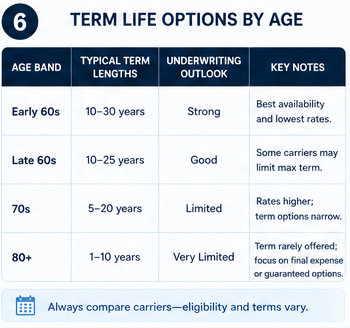
Term Life Insurance Options By Age Band: Realistic Expectations
Early 60s: This is often the sweet spot for seniors. Many applicants can qualify for 15 or 20 year terms, depending on health. If you are still working or have a large mortgage, longer terms may be available and reasonably priced if you are healthy.
Late 60s: Ten and fifteen year terms are common. Pricing becomes more sensitive to health details, and some carriers begin tightening maximum issue ages for longer terms. This is also the stage where a no exam option may be attractive if you want speed, but it may cost more.
70s: Ten year term may be the primary option, with fewer carriers willing to issue longer terms. Underwriting scrutiny increases. If traditional term becomes expensive or unavailable, consider whether a smaller term amount plus a final expense policy meets the real need.
80 and beyond: Traditional term is often limited. Seniors in this range frequently look at final expense or guaranteed universal life options for lifelong coverage goals, but availability depends on the carrier and health.
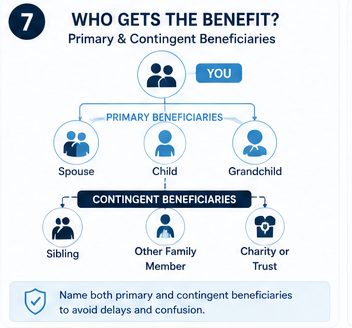
How Beneficiaries and Payouts Work, and How to Set It Up Correctly
Choosing the right beneficiary setup is just as important as selecting the term and amount. Most seniors name a spouse as primary beneficiary and children as contingent beneficiaries. If you have multiple heirs, consider whether you want equal shares or specific percentages. If you have a trust, complex family situation, or a beneficiary with special needs, speak with an estate planning attorney for guidance on ownership and beneficiary designations.
- Primary beneficiary: First in line to receive the benefit.
- Contingent beneficiary: Receives the benefit if the primary beneficiary has passed away.
- Per stirpes vs per capita: These terms affect how benefits flow to grandchildren if a child predeceases you, and rules vary by carrier and state forms.
Riders Seniors Often Consider
Riders are optional features that modify coverage. Not every rider is useful, and adding riders can increase cost, but a few are worth asking about.
- Accelerated death benefit: Allows early access to part of the death benefit for qualifying illnesses, typically included at no extra cost.
- Waiver of premium: May waive premiums if you become disabled, availability and definitions vary and may be limited at older ages.
- Child or grandchild rider: Small term coverage for younger family members, sometimes used for convenience, but often not essential.
When Term Life Might Not Be the Best Fit for a Senior
Term life is excellent for time limited needs, but it is not always the right solution. If your goal is to guarantee a payout no matter when you pass away, or you want to cover final expenses with lifelong protection, permanent coverage may fit better. Also, if you know you will want coverage beyond the term and conversion is not attractive, a permanent policy can sometimes be more straightforward.
That said, many seniors use a blend: term for a larger temporary need, and a smaller permanent policy for final expenses. The best structure depends on budget and goals.

How to Get Accurate Quotes Quickly: A Senior Checklist
Before you request quotes, gather these items. It reduces delays and helps produce realistic pricing.
- Date of birth, height, weight
- Tobacco or nicotine status and last use date
- List of medications and why you take them
- Dates and details of major diagnoses, procedures, or hospitalizations
- Primary care doctor contact information
- Any existing life insurance amounts and carriers
- Coverage goal, term length goal, and monthly budget range

How Life Insured By Chris Helps Seniors Compare Term Life Insurance
Life Insured By Chris was founded to bring clarity, choice, and confidence to life insurance. For seniors, that means shopping your profile across a broad set of A plus rated carriers, explaining the tradeoffs between exam and no exam options, and helping you choose coverage that you can keep. Because different companies treat the same health history differently, having access to multiple carriers can make a meaningful difference in both price and approval odds.
Next steps
If you are a senior considering term life insurance, start by choosing the purpose and the duration of the need, then estimate a coverage amount that fits your budget comfortably. From there, compare quotes based on the rate class you are likely to receive, confirm the level premium period, and prioritize financially strong carriers with policy features that still make sense if your health changes. With a clear plan and a thorough comparison, term life insurance can be a simple, cost effective way to protect the people you love.
Ready to compare your options? We'll shop more than 30 top-rated carriers to help you find the right life insurance, whether a no-exam policy or traditional underwriting is the better fit. → Visit: https://myagentisverified.com/Calendar/lifeinsuredbychris |