Can You Get Life Insurance After Health Problems?
When Marcus called me, his voice had that careful calm people use when they are bracing for bad news. He was 46, a dad of two, and he had done what so many of us do when life finally slows down enough to look at the bigger picture. He Googled life insurance, clicked a few quotes, and then stopped cold at the health questions. Heart attack at 41. Stents. Blood pressure meds. Cholesterol meds. He told me, "I waited too long, did I? I think I missed my chance."
Marcus was not looking for a miracle. He wanted honesty. He wanted to know if protecting his family was still possible, or if every company would take one look at his medical history and say no. He also wanted to avoid the kind of sales pitch that makes you feel like you are signing something you do not understand. So we slowed down, talked through his timeline, his follow ups, and what had changed since the event. Then we shopped his case across multiple carriers, the right way, with context instead of fear.
Two weeks later he texted, "I got approved." It was not the cheapest rate class in the book, but it was real coverage, from a strong carrier, sized to his family and budget. More importantly, he stopped thinking of himself as "uninsurable" and started thinking in terms of options and next steps.
So, Can You Get Life Insurance After Health Problems?
In many cases, yes. People get life insurance every day after serious diagnoses and setbacks. Approval and pricing depend on the condition, severity, treatment, stability over time, and the type of policy you apply for. The key is understanding how underwriting works, what products fit different situations, and how to present your history clearly so you are evaluated fairly.
Why Health Problems Do Not Automatically Mean a Denial
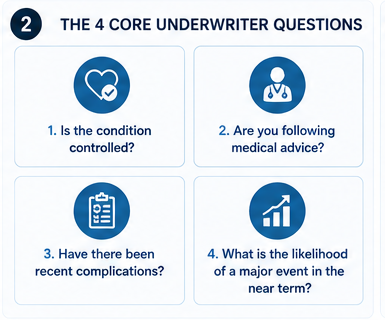
Life insurance companies are in the business of measuring risk, not judging worthiness. A health problem is a risk factor, but many conditions are manageable, treatable, and stable for years. Underwriters look for patterns that answer a few core questions: Is the condition controlled? Are you following medical advice? Have there been recent complications? What is the likelihood of a major event in the near term?
For example, controlled high blood pressure with consistent checkups is viewed differently than uncontrolled blood pressure with missed appointments. A cancer history from years ago with clean follow ups is evaluated differently than active treatment. The details matter, and time since diagnosis or last episode often matters as much as the diagnosis itself.
What Life Insurance Companies Evaluate Beyond Your Diagnosis
When people think about underwriting, they usually focus on the name of the condition. Underwriters typically focus on the full story around it. Expect questions and verification around:
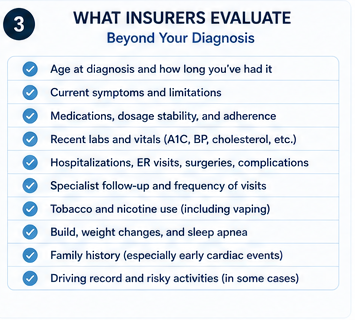
- Age at diagnosis and how long you have had the condition
- Current symptoms and limitations, if any
- Medication, dosage stability, and adherence
- Recent lab results and vitals, such as A1C, blood pressure, cholesterol
- Hospitalizations, ER visits, surgeries, and complications
- Specialist follow up and frequency of visits
- Tobacco and nicotine use, including vaping
- Build, weight changes, and related issues like sleep apnea
- Family history, especially early cardiac events
- Driving record and risky activities in some cases
Many fully underwritten policies can include a brief health exam with blood and urine. Some applications skip the exam but still use digital data sources, like prescription history and medical record checks. Either way, it is best to assume the insurer will verify key information.
Common Health Histories That Can Still Qualify
Every carrier has its own guidelines, but many people are surprised by what can be insurable, especially when a condition is stable. Here are examples that often still have paths to coverage:
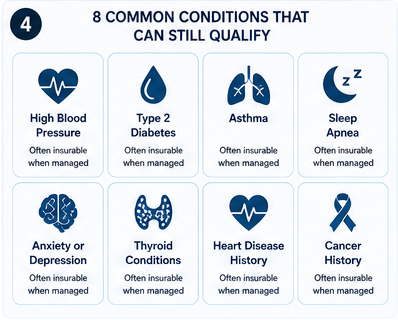
- High blood pressure or high cholesterol: Often insurable when controlled and without major complications.
- Type 2 diabetes: Many carriers offer coverage, especially with reasonable A1C, no severe complications, and good follow up.
- Asthma: Frequently insurable, especially if well controlled without frequent hospital visits.
- Sleep apnea: Often insurable when treated, especially with CPAP compliance.
- Anxiety or depression: Many people qualify, particularly when stable, compliant with treatment, and without recent hospitalizations or self harm history.
- Thyroid conditions: Commonly insurable when managed.
- Heart disease history: Often possible, depending on the event, time since, follow ups, and current stability.
- Cancer history: Sometimes possible after treatment with enough time and favorable follow up, depending on type and stage.
There are also situations where traditional coverage is harder in the short term, such as ongoing treatment, very recent cardiac events, advanced complications, or active substance abuse. Even then, alternatives may exist, and future insurability can improve with time and stability.
Understanding Rate Classes: Why Prices Change After Health Problems
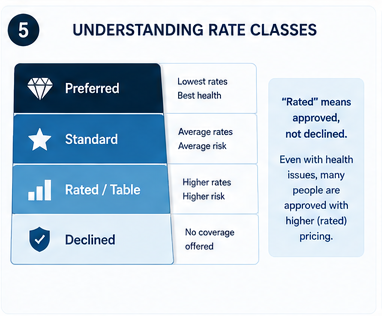
Life insurance pricing is typically based on risk classes. Different carriers name them differently, but the general idea is the same. The best pricing is reserved for people with the lowest overall risk. After a significant health issue, you may still be approved, but placed in a higher risk class, which increases the premium.
You may hear terms like Preferred, Standard, or rated classes (sometimes expressed as a table rating). A rating is not a rejection. It is the insurer saying, "We can cover you, but the risk is higher than average." This can still be a win if you get the protection your family needs at a budget you can handle.
Policy Types That May Work After Health Problems
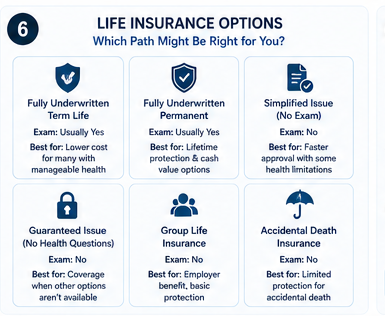
Choosing the right product matters as much as choosing the right carrier. Depending on your health, goals, and budget, one of these may fit best:
1) Fully underwritten term life insurance
This is often the best value when you can qualify. It offers larger death benefits for lower cost, especially for a set period like 10, 15, 20, or 30 years. Even after health problems, many people still qualify for term coverage, but the best carrier for your exact profile is not always the one with the loudest advertising.
2) Fully underwritten permanent life insurance
Whole life and universal life can be useful when you want lifelong coverage, estate planning, or final expense protection. After health problems, pricing can be higher, but some carriers are more favorable to certain conditions. For some applicants, a modest permanent policy can make sense when term coverage is limited.
3) Simplified issue life insurance
Simplified issue policies usually have no exam, but they still ask health questions and may check prescription and medical data. They can be a strong option if you want speed, have a moderate health history, or want to avoid the exam. Coverage amounts can be smaller than fully underwritten plans, and pricing can be higher, but approvals can be more straightforward for some profiles.
4) Guaranteed issue life insurance
Guaranteed issue policies typically accept applicants within an age range without medical questions. They often have lower coverage limits and higher premiums, and many include a waiting period or graded benefit for natural death in the first years. These can be a last resort option when health makes other coverage unavailable right now.
5) Group life insurance through work or associations
Some employer plans offer guaranteed issue up to a certain amount. This can be a great starting point if you have health concerns. The downside is you may lose coverage if you leave the employer, and the benefit amount may not be enough on its own.
6) Accidental death coverage
This is not a replacement for life insurance because it only pays for qualifying accidents. Still, for some people who cannot qualify medically right now, it can provide limited, temporary protection while working toward future insurability.
How Timing Affects Your Options
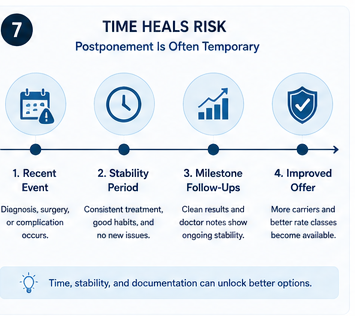
With many health problems, time is a key variable. Underwriters often want to see stability, consistent treatment, and no major complications for a certain period. While every case is different, here are general patterns that often influence outcomes:
- Recent major events: A heart attack, stroke, or major surgery in the last few months can trigger a postponement. Postponement means "not now," not necessarily "never."
- Milestone follow ups: A clean stress test, stable cardiology notes, or improved lab results over time can meaningfully change offers.
- Cancer timelines: Many carriers consider time since treatment completion and the type and stage. Some are more open than others for certain cancers.
- Mental health stability: Stability, consistent care, and time since hospitalization can matter more than the diagnosis label.
If you are recently diagnosed or recently had a major episode, you may still want to explore options now, but also plan for a second attempt later when your profile looks stronger.
How To Improve Your Chances of Approval and Better Pricing
You cannot change your past, but you can present your current risk accurately and strengthen your profile. Practical steps that often help include:
- Be consistent with care: Regular checkups and following treatment plans signal stability.
- Know your numbers: Recent A1C, blood pressure readings, cholesterol panels, and any key test results can guide carrier selection.
- Take medications as prescribed: Gaps in refills can raise questions, even when you feel fine.
- Stop nicotine: Nicotine use is one of the biggest premium drivers. Quitting can open better rate classes over time.
- Manage weight and sleep: Improving BMI, addressing sleep apnea, and building sustainable activity habits can help both health and underwriting.
- Prepare your timeline: Dates of diagnosis, procedures, hospitalizations, and last specialist visits help avoid confusion and delays.
- Apply for an appropriate amount: Very large face amounts can trigger deeper scrutiny. Starting with a realistic amount can sometimes help.
- Consider layering coverage: A smaller policy now plus more later can be smarter than waiting for perfect health.
What To Expect During The Application Process
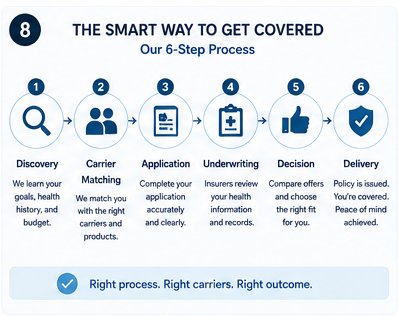
The unknown is often what makes people avoid applying. A clear process helps reduce anxiety and surprises. Here is what typically happens:
- Step 1, discovery: You share your goals, budget, and health history at a high level.
- Step 2, carrier matching: An independent agent can identify carriers that are historically favorable to your profile.
- Step 3, application: You answer health questions and provide identification and beneficiary information.
- Step 4, underwriting: This may include an exam, record review, prescription check, and follow up questions.
- Step 5, decision: Approval at a certain rate class, a rated offer, a postponement, or a decline.
- Step 6, delivery: You review the policy, set up payment, and confirm beneficiaries.
If you have health problems, underwriting may ask for additional details, which is normal. The goal is to make sure the picture is complete, especially when there is complexity.
Real World Scenarios and What Usually Matters Most
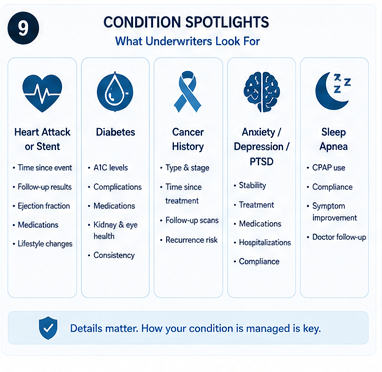
People often ask about specific conditions. While only an insurer can make the final call, these are common scenarios and the factors that usually carry the most weight.
Life insurance after a heart attack or stent
Many people can qualify, especially as time passes. Underwriters often focus on time since the event, current cardiac function, follow up care, medications, any recurring chest pain, and test results like stress tests or echocardiograms. Tobacco use and diabetes can also heavily influence pricing. If you are stable and compliant, multiple carriers may consider you.
Life insurance with diabetes
Type 2 diabetes is frequently insurable. Key factors include A1C, complications (neuropathy, kidney issues, retinopathy), medication type, and how long you have had diabetes. Good control and consistent care can make a big difference. Even if the first offer is not ideal, it is sometimes possible to improve your rate at renewal or through a new application later if your numbers improve.
Life insurance after cancer
This is highly specific to the type of cancer, stage, grade, treatment, and time since treatment ended. Some cancers allow for coverage sooner than others. Underwriters will look for remission status, follow up schedules, and any recurrence. The same person can get very different outcomes depending on carrier appetite for that particular cancer history.
Life insurance with anxiety, depression, or PTSD
Many applicants are approved, especially with stable symptoms and consistent treatment. Insurers may ask about hospitalizations, time off work, medication changes, and any history of self harm. Being open and accurate matters. Mental health is treated like other health risks, with an emphasis on stability and support.
Life insurance with sleep apnea
Sleep apnea can increase risk when untreated. If you use a CPAP and follow up as advised, many carriers treat it more favorably. Your build, blood pressure, and any related cardiac concerns may also factor into pricing.
Common mistakes that can derail an otherwise insurable application
Most denials or poor outcomes are not because someone is a bad person, they are because the application did not match the records or the carrier was a poor fit. Mistakes to avoid include:
- Minimizing or forgetting diagnoses, procedures, or medications
- Applying with a carrier that is known to be strict on your condition
- Letting a policy lapse and trying to restart after health worsens
- Only shopping with one company and assuming that answer is universal
- Buying the fastest policy available without understanding waiting periods or graded benefits
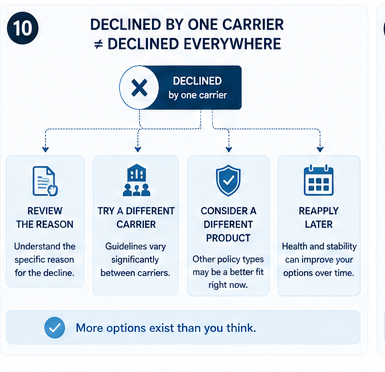
When a Decline Happens, What To Do Next
A decline feels personal, but it is usually just a mismatch between your profile and that carrier's rules. If you are declined:
- Ask for the reason in writing or through the agent
- Review whether the issue was medical, administrative, or based on missing records
- Consider a different carrier with different underwriting guidelines
- Consider a different product type, such as simplified issue or smaller coverage
- Build a plan to reapply after a stability period, with improved labs and documented follow up
In many cases, a decline from one carrier does not prevent approval elsewhere. The best next step is usually a focused, strategic re shop, not a series of random applications.
How Life Insured By Chris Helps People Get Coverage After Health Problems
Life Insured By Chris was founded in 2024 with one clear mission, to bring clarity, choice, and confidence to life insurance. When health history is involved, clarity and choice matter even more. We are licensed in multiple states and partner with more than 30 A+ rated insurance carriers, which allows us to look for the best fit for your medical profile instead of forcing you into a one company box.
That matters because underwriting is not uniform. One carrier may be cautious about a certain cardiac history while another may be more favorable if the follow ups look strong. One carrier may be strict on build, another may focus more on labs. Our job is to help you understand the trade offs, compare offers, and choose coverage that protects your family without pressure.
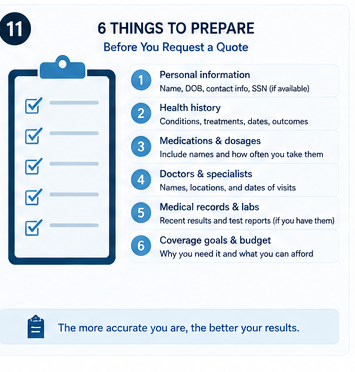
Checklist Before You Apply
If you want to move forward, gather a few basics. It speeds up underwriting and reduces back and forth:
- Your diagnosis dates and any procedure dates
- Names of medications and approximate start dates
- Doctor and specialist contact info
- Recent lab results if you have them, such as A1C or lipid panel
- Any recent test results relevant to the condition, like stress test summaries
- Your coverage goal, for example income replacement, mortgage payoff, or final expenses

Bottom line
Health problems can change your life insurance options, but they rarely eliminate them entirely. The right outcome usually comes from matching the right product and the right carrier to your exact situation, presenting your history clearly, and knowing when to apply now versus when to build more stability and try again.
If you see yourself in Marcus's story, the next step is not to assume you missed your chance. The next step is to find out what is actually possible, with real carriers and real underwriting, and to do it with clarity and confidence.
Important note
This article is for educational purposes and is not medical advice. Life insurance availability and pricing vary by carrier, state, and individual underwriting.
| Ready to compare your options? We'll shop more than 30 top-rated carriers to help you find the right life insurance, whether a no-exam policy or traditional underwriting is the better fit. → Visit: www.lifeinsuredbychris.com/schedule-a-consultation |