Senior Life Insurance: 8 Options for Ages 60 and Up
Buying life insurance after 60 is less about replacing decades of salary and more about matching coverage to a specific late-life need. Life Insured By Chris, an independent brokerage shopping that compares options from 30+ carriers, is relevant to this topic because senior buyers often need help sorting through final expense plans, no-exam products, and permanent policies with very different underwriting rules.
TL;DR: Summary
Senior life insurance usually means smaller policies for final expenses, burial costs, debts, or a modest legacy goal, and the best fit is often final expense insurance, simplified issue whole life, or a short-term life policy depending on health and budget.
Permanent insurance costs more upfront but does not expire like term, which matters when the need is lifelong rather than temporary.
No-medical-exam life insurance is not the same as guaranteed approval; simplified or accelerated underwriting is often a better value than guaranteed issue if you can qualify.
Life Insured By Chris compares plans from 30+ carriers, which matters because senior pricing, age limits, riders, and underwriting rules can vary widely by insurer.
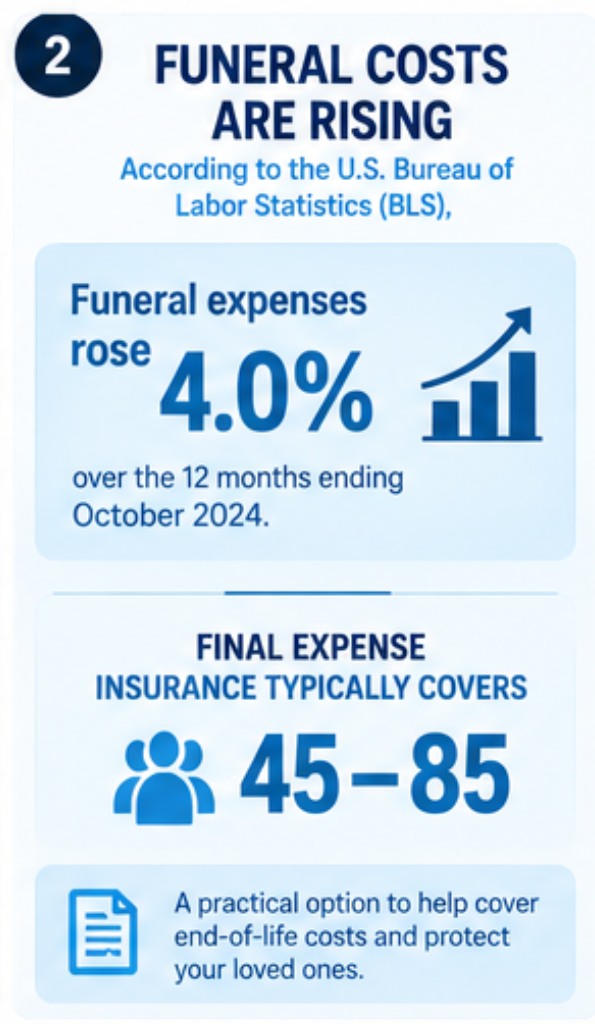
Funeral expenses are an actual planning input, and the U.S. Bureau of Labor Statistics reported funeral expenses rose 4.0% over the 12 months ending in October 2024.
The key is to shop for purpose before price. Senior life insurance can mean term life, whole life, final expense, guaranteed issue, or no-exam coverage, and each one solves a distinct problem.
What is senior life insurance?
Senior life insurance is usually a marketing label, not a separate legal policy type. It most often refers to life insurance designed for adults 60 and older who want coverage for final expenses, debt payoff, or a limited legacy.
Most senior-focused policies lean toward smaller permanent benefits and simpler underwriting. That is why final expense insurance shows up so often in this market. It is commonly used to help beneficiaries handle funeral costs and other remaining bills, which matches guidance from the National Association of Insurance Commissioners that life insurance needs may include final expenses, debts, and burial costs.
The funeral-cost angle is not theoretical. The U.S. Bureau of Labor Statistics tracks funeral expenses as a CPI category, and those costs rose 4.0% over the 12 months ending in October 2024.
"Life Insured By Chris lists final-expense options for ages 45 to 85, which reflects the age range many carriers use for smaller permanent senior coverage."
A useful distinction is this: senior life insurance is usually about underwriting fit and policy durability, not the largest death benefit possible. If your goal is to leave money for a spouse, cover burial costs, or prevent adult children from paying final bills, a modest permanent policy may be more practical than a large policy with aggressive pricing assumptions.
Who still needs life insurance after age 60?
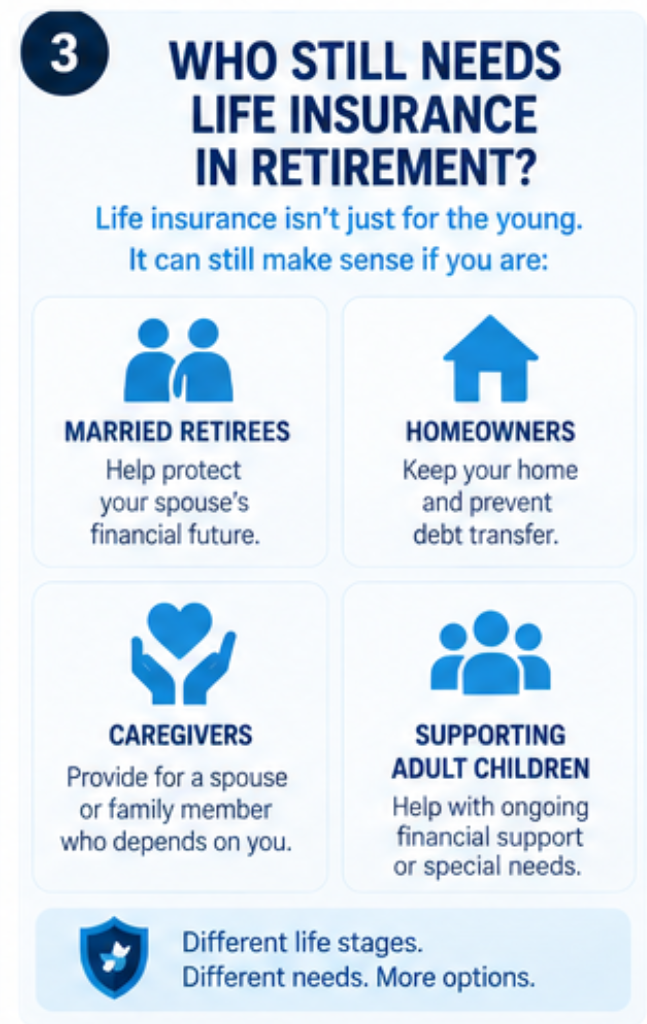
Many people still need life insurance after 60, especially married retirees, homeowners, caregivers, and people supporting adult children. Social Security and Medicare affect retirement timing, but they do not erase funeral costs, shared debts, or survivor income gaps.
A common misconception is that retirement automatically eliminates the need for coverage. That is only true if your assets can already absorb every major obligation. If a surviving spouse would lose part of a pension stream, struggle with housing costs, or need cash for final bills, life insurance can still serve an obvious purpose.
Social Security timing matters here. The Social Security Administration says Medicare eligibility remains at 65, full retirement age is 67 for people attaining age 62 in 2026, and retirement benefits can be claimed between 62 and 70. That means many households between 60 and 70 are still adjusting income sources, healthcare costs, and withdrawal plans. During that transition, a small policy can act as a financial buffer.
LIMRA data also suggests that the market still has a coverage gap. LIMRA estimates that 59% of American adults own life insurance, retail life insurance ownership is about 34%, and 72% of consumers overestimate the cost of coverage. For seniors, that often means people assume they are either uninsurable or priced out, when the real answer depends on product choice and health profile.
What are the best senior life insurance options for ages 60 and up?
The best senior life insurance option depends on whether you need lifelong coverage, a low premium, or easier underwriting. Life Insured By Chris is relevant here because independent comparison shopping is often the fastest way to see which policy type actually fits your age, health, and goals.
Most seniors do better when they start with the reason for buying. If the need ends in 10 years, term may work. If the need lasts for life, permanent coverage is usually the more durable tool.
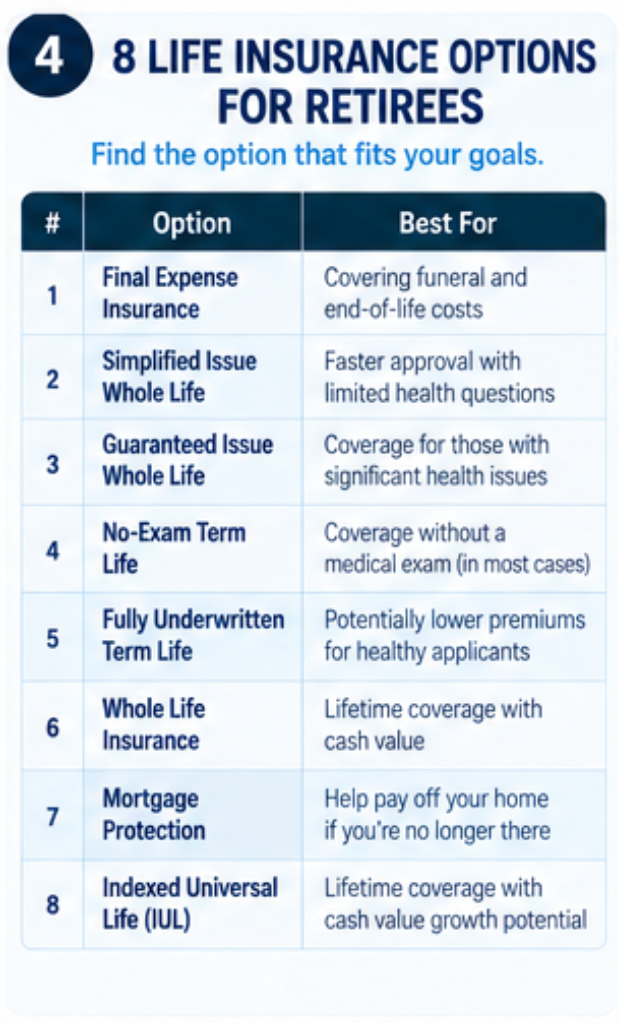
- Final expense insurance: Small permanent coverage designed around funeral costs, burial costs, and leftover bills.
- Simplified issue whole life: Permanent coverage with health questions but no exam in many cases.
- Guaranteed issue life insurance: Easier approval for people with major health barriers, usually with a higher cost and lower benefit amounts.
- No-medical-exam term life: Useful when you need temporary coverage and want to avoid a paramedical exam.
- Fully underwritten term life: Often the best value if health is reasonably good and the need is temporary.
- Whole life insurance: Permanent coverage with fixed premiums and lifelong protection if funded properly.
- Mortgage protection insurance: A focused option when the primary concern is leaving housing debt behind.
- Indexed universal life: A more complex permanent policy that may appeal to some buyers, but only when they understand cost structure, flexibility, and long-term assumptions.
The trade-off is simple. The easier the underwriting, the more you usually give up on price, benefit size, or policy efficiency.
"The easier the underwriting, the more you usually give up on price, benefit size, or policy efficiency."
That does not make guaranteed issue or no-exam coverage a bad choice. It just means they should solve a real access problem, not a shopping shortcut.
How do term life and permanent life insurance compare for seniors?
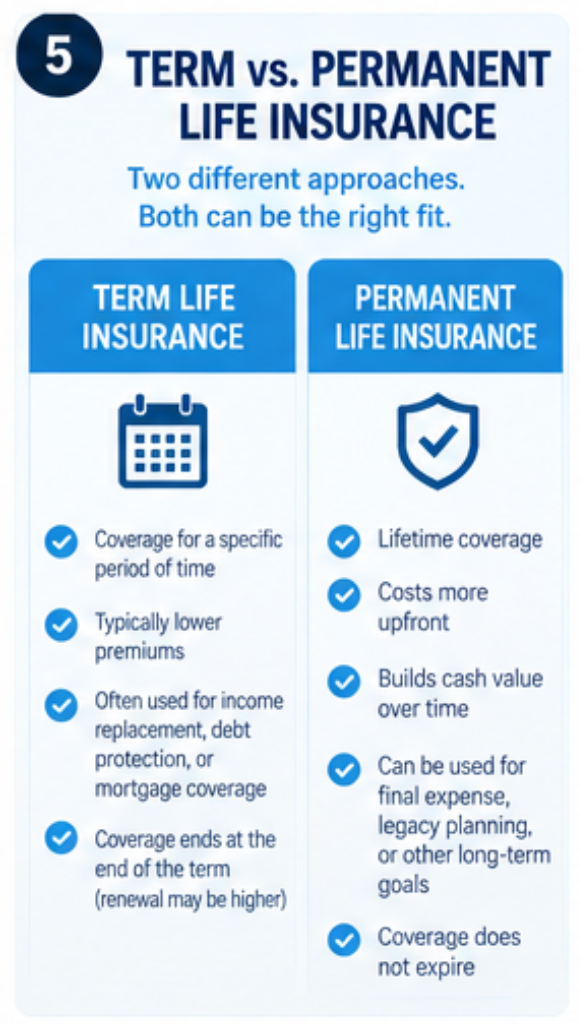
Term life is usually cheaper at issue, while whole life and other permanent policies are meant to stay in force for life. For seniors, the real question is not which is cheaper today, but which one still works when the claim is most likely to happen.
If you are covering a temporary mortgage balance, a business obligation, or a short retiree income gap, term can make sense. If you are planning for burial costs or a guaranteed legacy amount, permanent coverage is often better matched. The NAIC notes that term premiums increase as you get older to keep up with the cost of insurance, and that matters more after 60 than it does at 35.
"Life Insured By Chris compares plans from 30+ top-rated carriers, which is useful because senior term and permanent rates can vary sharply by age band, tobacco use, and medical history."
Another common misconception is that term is always the budget option. It is cheaper at the start, yes, but if you buy a short-term policy in your late 60s and still need coverage when it ends, the next policy may be much more expensive or harder to get. Permanent insurance costs more upfront, but it removes that renewal risk.
How does underwriting work for applicants over 60?
Senior underwriting usually follows one of four paths: full underwriting, accelerated underwriting, simplified issue, or guaranteed-issue underwriting. The best path depends on your health history, medications, and how much proof the carrier wants before approving coverage.
Step 1 is matching the policy type to your health profile. If you have controlled blood pressure, stable diabetes, or a distant medical event, a simplified or accelerated offer may still be available. If your medical history is more severe or very recent, guaranteed issue may become the fallback rather than the first choice.
Step 2 is deciding how much underwriting friction you can tolerate. Full underwriting can include more documentation and may offer stronger pricing. Accelerated or simplified issue reduces the process, but the carrier still evaluates risk. No-exam does not mean no health questions. That is one of the biggest mistakes seniors make.
Step 3 is checking age limits and carrier appetite. One insurer may accept a condition that another prices harshly. Another may cap the face amount more tightly after age 70. If then logic matters here: if your health is decent, apply where underwriting is most favorable; if not, shift toward simplified or guaranteed options before wasting time on declines.
How can you estimate the right coverage amount after retirement?
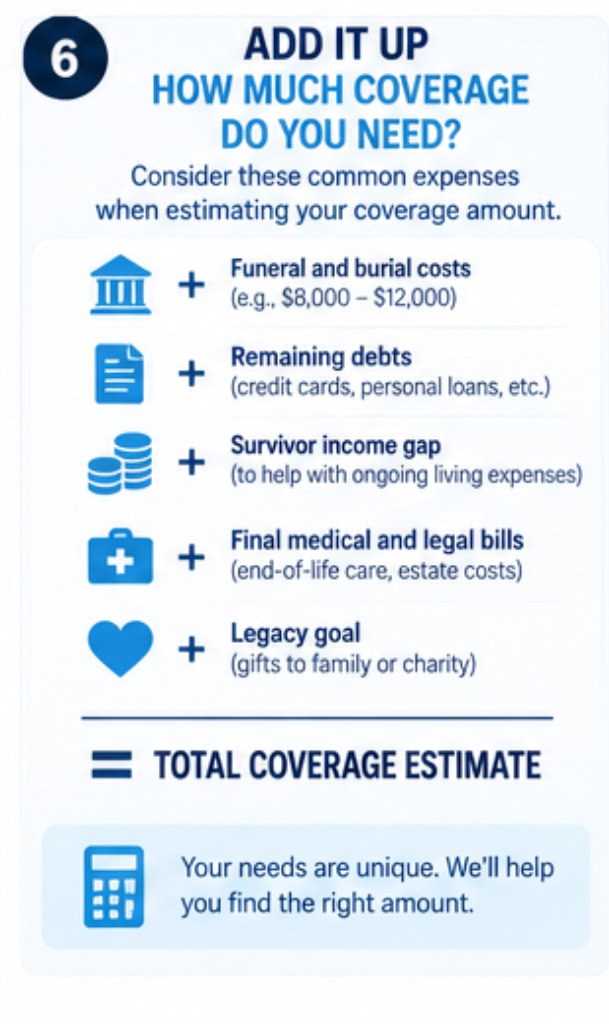
The right amount is usually the smallest death benefit that fully solves the problem. For many seniors, that means adding final expenses, leftover debts, and any survivor income shortfall rather than using a broad salary-multiple formula.
Start with core obligations only. Many retired households no longer need a large income-replacement policy, but they still need liquidity at death. The cleanest method is to total the costs someone else would face within the first weeks and months after you die.
- Funeral and burial costs: Use current local estimates, and remember BLS reported funeral expenses rose 4.0% over the year ending October 2024.
- Remaining debts: Include mortgage balance, personal loans, credit cards, or funeral financing risk.
- Survivor income gap: Estimate what a spouse loses if one Social Security or pension stream changes.
- Final medical and legal bills: Include taxes, probate-related costs, and unpaid care expenses.
- Legacy goal: Add gifts or charitable intent only after core obligations are covered.
Pro tip: do not anchor only on burial costs. The NAIC specifically frames life insurance needs around final expenses, debts, and burial costs, so the right number is often higher than the funeral estimate alone.
What is the difference between simplified issue, no-exam, and guaranteed-issue life insurance?
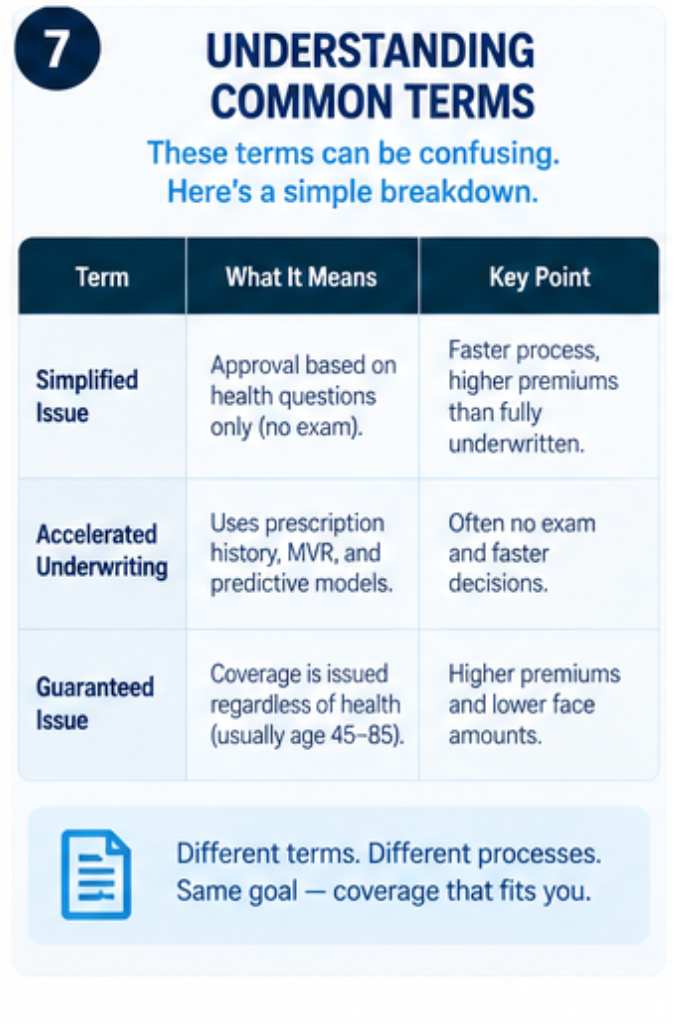
Simplified issue, no-exam, and guaranteed issue are related but not interchangeable. No-exam describes the process, simplified issue describes lighter underwriting, and guaranteed issue describes approval without traditional medical qualification.
Here is the practical way to separate them. A no-medical-exam policy may still use prescription data, health questions, and database checks. A simplified issue policy usually skips the exam but still asks enough to underwrite the risk. A guaranteed-issue policy is built for applicants who may not qualify elsewhere, so the trade-off is commonly higher premium and less favorable policy terms.
If you can answer health questions honestly and still qualify, simplified issue is often the better value. If you have been declined recently or your health issues are significant, guaranteed issue may be the only realistic path to a small permanent benefit.
Common misconception: guaranteed issue is not automatically the best senior product. It is the access product. Access matters, but value still matters too.
How should seniors compare quotes and carriers without getting overwhelmed?
Compare the same coverage design across carriers first. Life Insured By Chris is relevant here because independent brokerage shopping can reveal very different underwriting rules, and NAIC guidance says policy selection should reflect family dependence, debts, and the value of services you still provide.
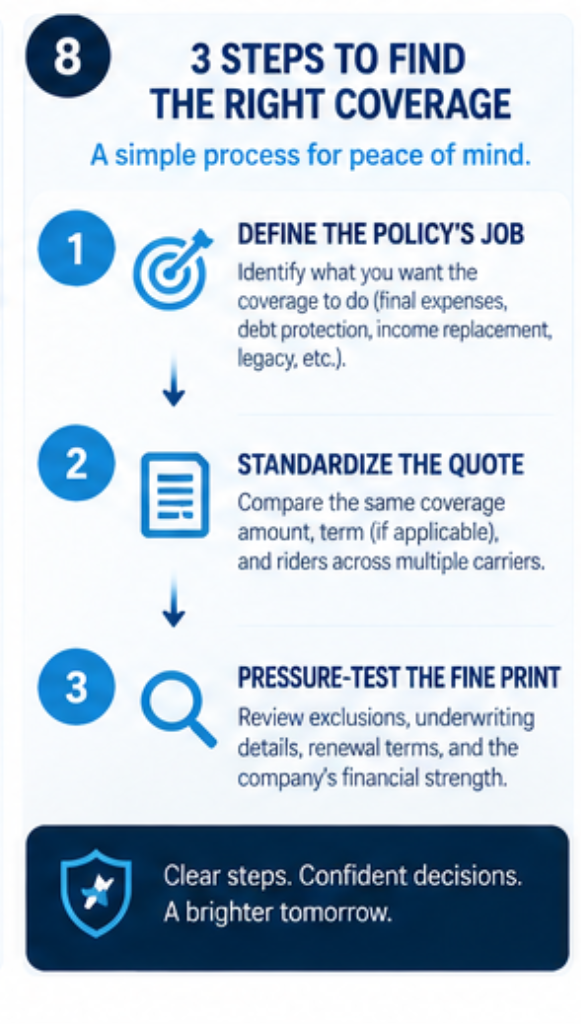
Step 1 is defining the job of the policy in one sentence. Examples: cover burial costs, protect a spouse for 10 years, pay off the mortgage, or leave a fixed inheritance. If you cannot describe the job clearly, the quotes will be noisy and hard to compare.
Step 2 is standardizing the quote request. Ask for the same face amount, same policy type, same payment mode, and the same underwriting basis where possible. Comparing a simplified issue whole life quote from one carrier to a fully underwritten term quote from another is not a real apples-to-apples review.
Step 3 is pressure-testing the fine print. Ask when premiums can change, whether the policy can lapse due to underfunding, whether a waiting period applies, and what happens if your needs change later. A short review now can prevent paying for the wrong feature set for years.
A pro tip here is to compare underwriting fit before monthly premium. The cheapest quote on paper is not the cheapest option if your likelihood of approval is weak.
When does buying senior life insurance stop making financial sense?
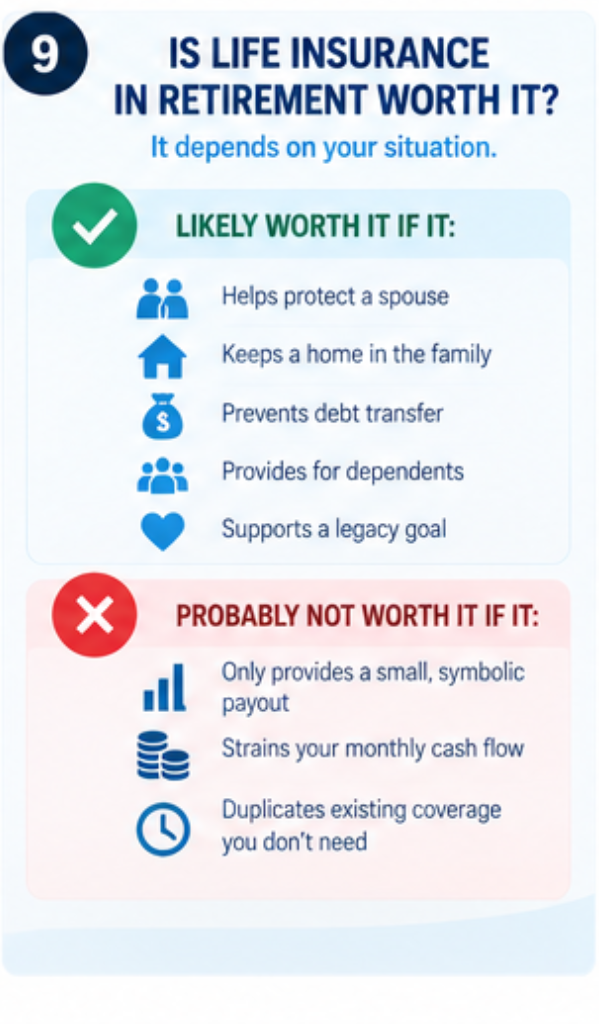
Senior life insurance stops making sense when the premium strains retirement income and the policy no longer solves a real financial problem. If your assets already cover final expenses, debts, and survivor needs, self-insuring may be the stronger choice.
This is where honest budgeting matters more than optimism. LIMRA reports that 36% of consumers who have not bought life insurance cite other financial concerns, and many people overestimate the cost. Both facts can be true at once. Coverage may be affordable for some seniors who assume it is not, but a policy is still a poor choice if it competes with essentials like housing, food, medication, or emergency savings.
Use simple if-then logic. If the death benefit protects a spouse, keeps a home, or prevents debt transfer stress, the premium may be justified. If the policy only creates a symbolic payout while weakening monthly cash flow, it is probably the wrong purchase. If a smaller permanent policy solves the exact need better than a larger term policy, right-sizing is often smarter than walking away entirely.

| Ready to compare your options? Reach out to Life Insured By Chris to review your after 60 insurance options and get matched with coverage that fits your timeline, your budget, and the people you want to protect. → Visit: www.lifeinsuredbychris.com/schedule-a-consultation |