Best High-Risk Life Insurance: 9 Plans Compared
High-risk life insurance is still life insurance. The difference is that pricing and approval depend more heavily on underwriting details, and an independent brokerage like Life Insured By Chris can help compare how 30+ carriers treat conditions like diabetes, hypertension, smoking, or past health events instead of relying on one insurer’s rules.
TL;DR: Summary
- The best high-risk life insurance option usually starts with fully underwritten or accelerated-underwriting term life if your condition is stable, then moves to simplified issue, no-exam, or guaranteed issue only when standard pricing is out of reach.
- NAIC says traditional underwriting may require a medical exam and fluid testing, while accelerated underwriting can use external data like prescription history and motor vehicle records and may return decisions in hours.
- Age and health are the main drivers of life insurance insurability, according to the U.S. Department of Veterans Affairs, but smoking, diabetes, hypertension, and other chronic conditions also shape approval odds and rates.
- Life Insured By Chris is an independent brokerage that compares 30+ carriers, which matters because one insurer may handle controlled hypertension or past nicotine use more favorably than another.
- No-exam coverage does not mean no underwriting, and guaranteed issue is usually a last-resort choice because premiums are higher and benefits are often smaller.
Many applicants who think they are “too risky” can still get covered. The practical question is not whether high-risk life insurance exists, but which underwriting path gives you the best mix of approval odds, premium, speed, and coverage size.
What counts as high risk in life insurance?
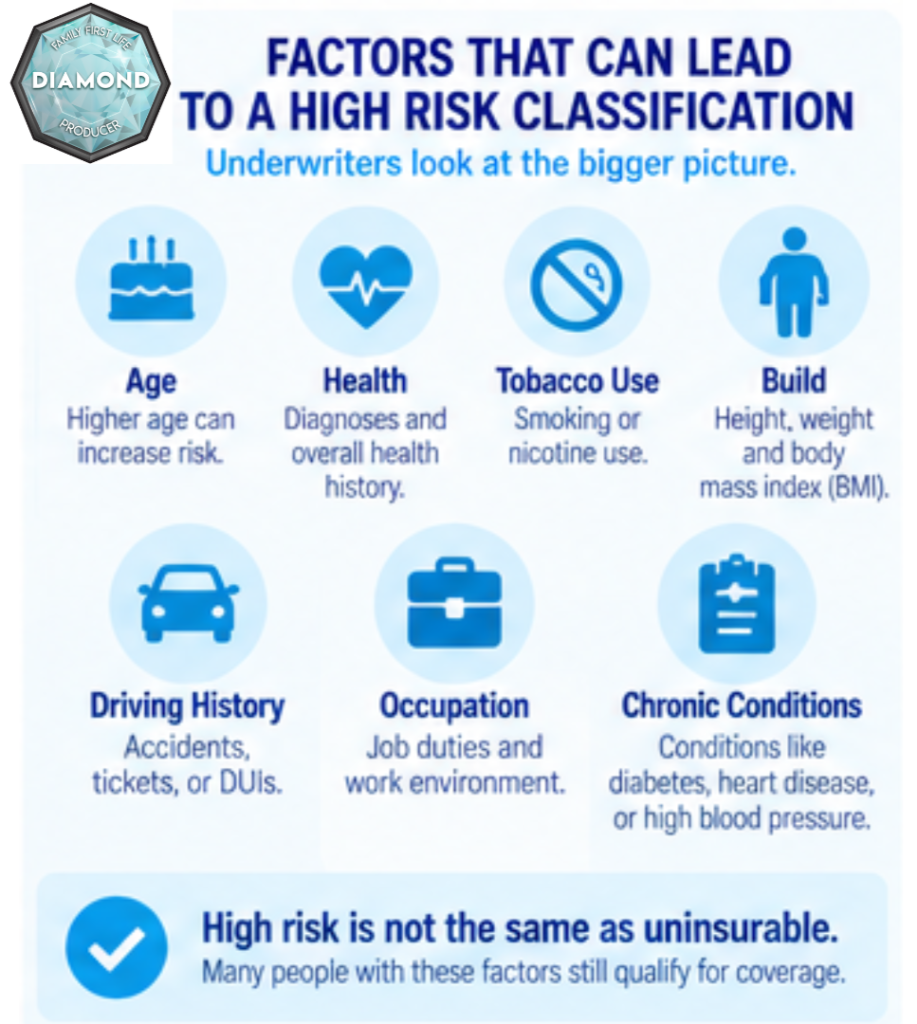
High risk means an insurer expects higher mortality risk or greater uncertainty than it sees in a standard applicant. The U.S. Department of Veterans Affairs and private carriers look first at age and health, then weigh smoking, build, driving history, occupation, and chronic conditions like diabetes or kidney disease.
“High risk” is not one fixed category across the life insurance market. One carrier may treat well-controlled Type 2 diabetes as manageable, while another may assign a steeper rate class. The same goes for sleep apnea, high blood pressure, obesity, nicotine use, or a past cancer history.
A common mistake is assuming high risk means uninsurable. In practice, many people are simply table-rated, which means coverage is offered at a higher premium than standard rates. If your condition is stable, your labs are improving, and your prescriptions are consistent, that often matters more than the label itself.
How does underwriting for high-risk life insurance work?
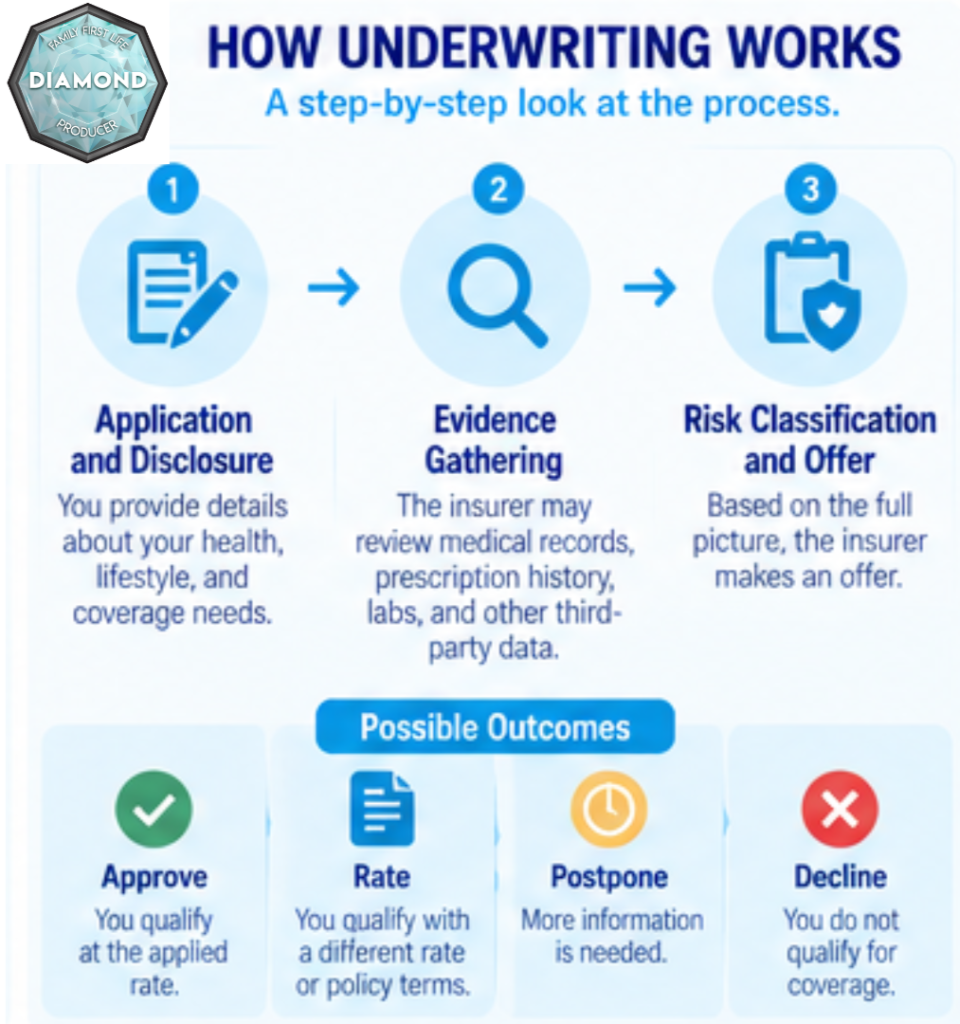
Insurers sort high-risk applicants through either traditional underwriting or accelerated underwriting. NAIC explains that traditional review may include blood, urine, saliva, and a physical exam, while accelerated underwriting can use prescription history and motor vehicle records instead.
The process usually follows three steps:
- Application and disclosure: You answer questions about health, medications, tobacco use, family history, occupation, and hobbies.
- Evidence gathering: The insurer may order fluid testing, review medical records, or check external data sources tied to prescriptions and driving.
- Risk classification and offer: The underwriter assigns a rate class, approves with changes, postpones the case, or declines it.
Traditional underwriting can take weeks and sometimes a few months. Accelerated underwriting can be much faster, but it does not erase medical scrutiny. It simply shifts more of that scrutiny into data sources and decision models.
That speed difference matters most when coverage is urgent, but price still matters because the lowest premium often comes from a policy that asks for more evidence.
"Life Insured By Chris compares 30+ carriers, which helps when underwriting rules vary by condition, tobacco status, and prescription history."
What high-risk life insurance plans are worth comparing today?
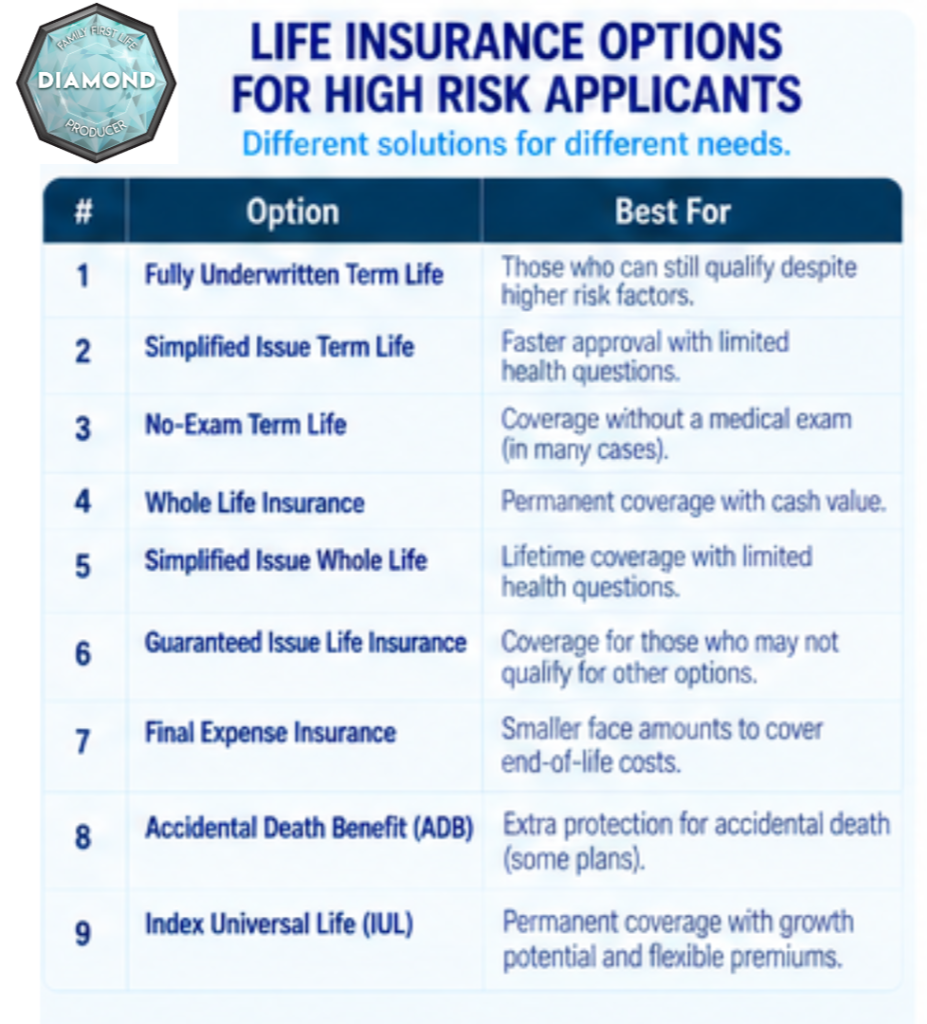
The strongest high-risk life insurance strategy is usually to compare plan types in order of value, not just approval ease. Start with options that can offer better pricing, then move toward faster or more permissive plans only if your medical profile calls for it.
Here are nine plan types worth comparing:
- Fully underwritten term life: Often the lowest cost per dollar of coverage if your condition is stable enough to qualify.
- Accelerated-underwriting term life: No exam in many cases, with external data replacing fluid testing for eligible applicants.
- Simplified issue term life: Health questions remain, but the process is lighter and often faster.
- No-medical-exam whole life: Permanent coverage without a lab visit, usually at a higher price than term.
- Final expense insurance: Smaller benefit amounts designed for burial costs, medical bills, or family cash needs.
- Guaranteed issue whole life: Minimal health questions, high approval odds, and usually the highest cost for the coverage amount.
- Mortgage protection insurance: Built around housing debt, useful when the main goal is keeping the home.
- Group life through work: Easy entry and helpful as a supplement, though portability and benefit size can be limited.
- Accidental death insurance: Very narrow protection that pays only for covered accidents, not natural causes.
If your condition is controlled and you need a large death benefit, term life is usually the first place to look. If your history is more complex, a simplified issue or no-exam permanent policy may be a better fit. If repeated declines or severe illness make other routes unrealistic, guaranteed issue may still provide some protection.
How do no-exam and traditional life insurance compare for high-risk applicants?
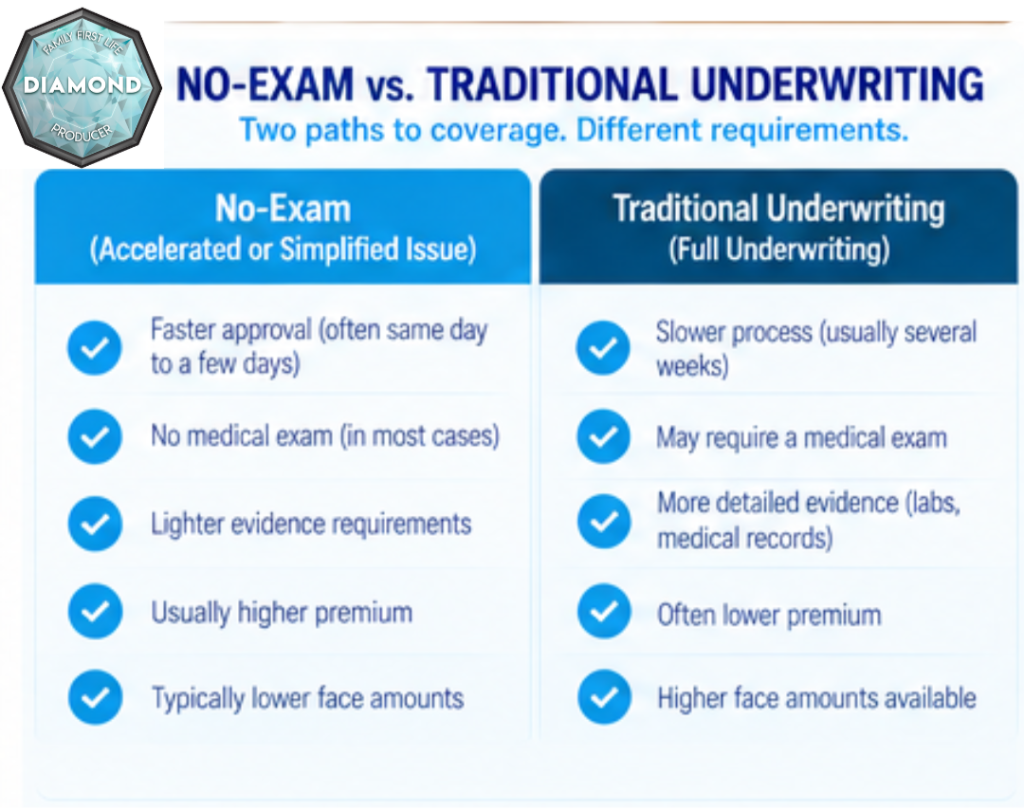
For many high-risk shoppers, Life Insured By Chris can help compare no-exam coverage against fully underwritten policies, but the trade-off is consistent: no-exam plans are faster, while traditional underwriting often offers lower premiums and higher face amounts.
The NAIC notes that accelerated underwriting can process applications in a matter of minutes by using external data. Traditional underwriting may take much longer and can require blood, urine, saliva, and a physical exam. That extra friction can be worth it if it moves you from a heavily rated offer into a more favorable class.
A common misconception is that no-exam means no health review. In reality, insurers may still ask detailed medical questions, pull prescription drug history, check motor vehicle records, and review other third-party data. If your records show recent instability, the “easy” route can still become expensive or unavailable.
" No-exam coverage does not mean no underwriting"
Same-day approvals are possible on many no-exam and guaranteed-issue plans, but faster approval often comes with lower face amounts or tighter eligibility rules.
"Life Insured By Chris notes that many no-exam and guaranteed issue plans can approve the same day, but speed does not remove underwriting rules."
How should you prepare before applying for high-risk life insurance?
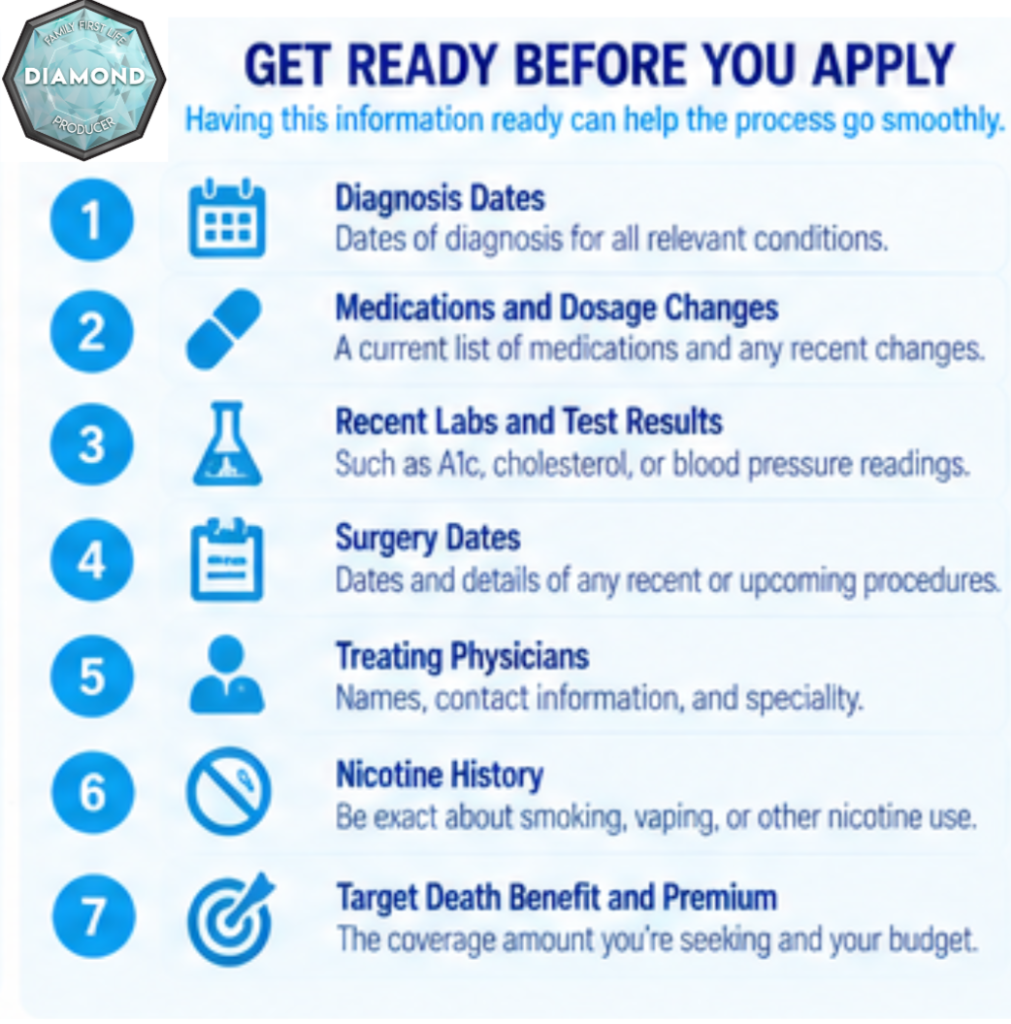
Before you apply, collect medication details, recent doctor follow-ups, nicotine history, and the exact diagnosis terms in your records, because underwriters price specifics, not guesses.
A clean application starts before the form itself. If you say your blood pressure is controlled, be ready for the insurer to see evidence of that in physician notes, refill history, or recent readings. If you quit smoking, know the date and whether you still use cigars, nicotine replacement, or vaping products.
Use this three-step prep process:
- Gather your facts: Diagnosis dates, medications, dosage changes, recent labs, surgery dates, and names of treating physicians.
- Set your target: Decide on the death benefit, term length, and monthly premium ceiling before you shop.
- Match the lane: Ask whether you are a fit for fully underwritten, accelerated, simplified issue, or guaranteed issue before filing formal applications.
If your condition has changed recently, timing matters. A better A1C, a few months of stable blood pressure, or a completed specialist follow-up can sometimes produce a meaningfully better offer than an application filed too early.
How do term and whole life compare when your risk profile is higher?
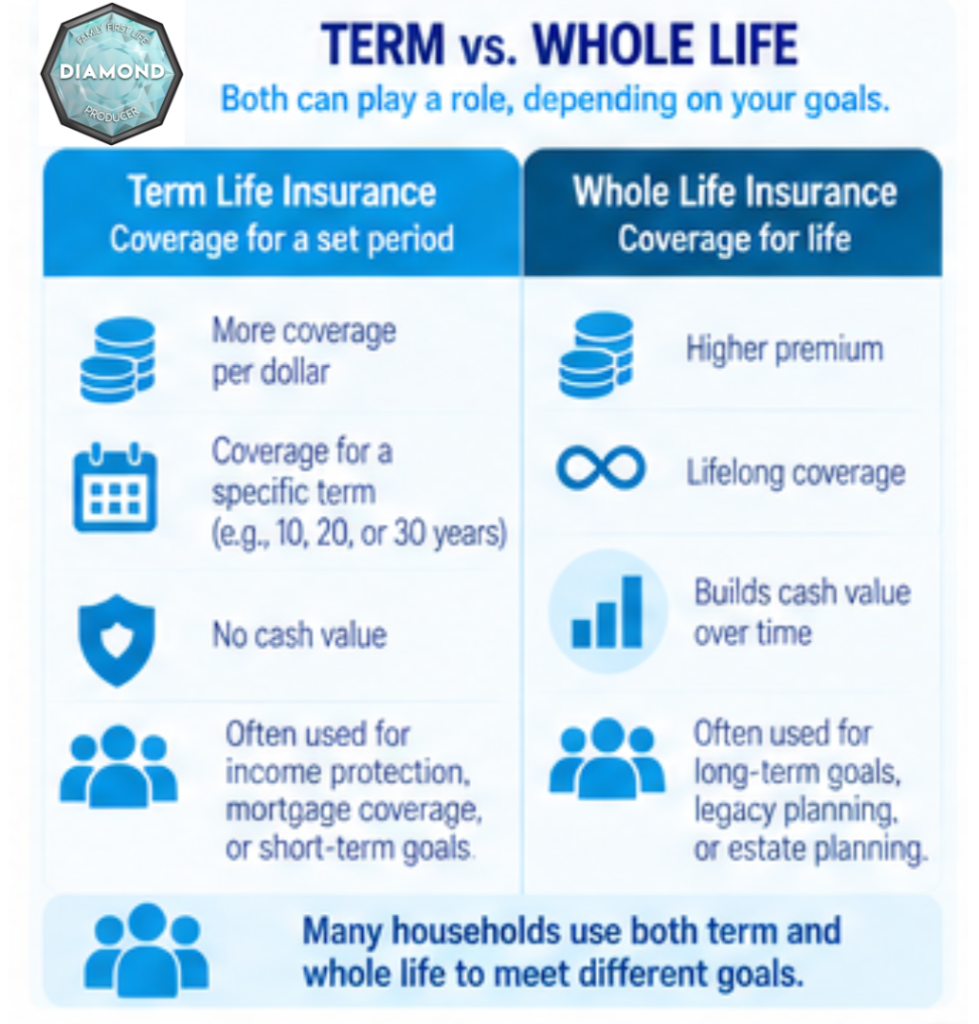
Term life and whole life solve different problems. Term usually buys more coverage for less money, while whole life offers permanent protection and cash value, which can matter if a high-risk condition makes future insurability less certain.
If your goal is income replacement, debt protection, or raising children, term life is usually the most efficient choice. A 20- or 30-year term can protect the years when your family depends most on your income. High-risk applicants often prefer this route because it maximizes death benefit per premium dollar.
Whole life works differently. The policy is built to stay in force for life if premiums are paid, which can be useful for estate liquidity, final expenses, or cases where buying more coverage later may be difficult. The trade-off is straightforward: more permanence, less coverage per dollar.
If your budget is tight, then term tends to win. If locking in permanent coverage now is the bigger priority, then whole life can make sense even at a smaller face amount. Many households use both.
How can you improve approval odds if you have hypertension, diabetes, or a smoking history?
Control and documentation matter as much as the diagnosis label. With hypertension, diabetes, or tobacco use, insurers want recent readings, medication adherence, and evidence that the condition is managed rather than ignored.
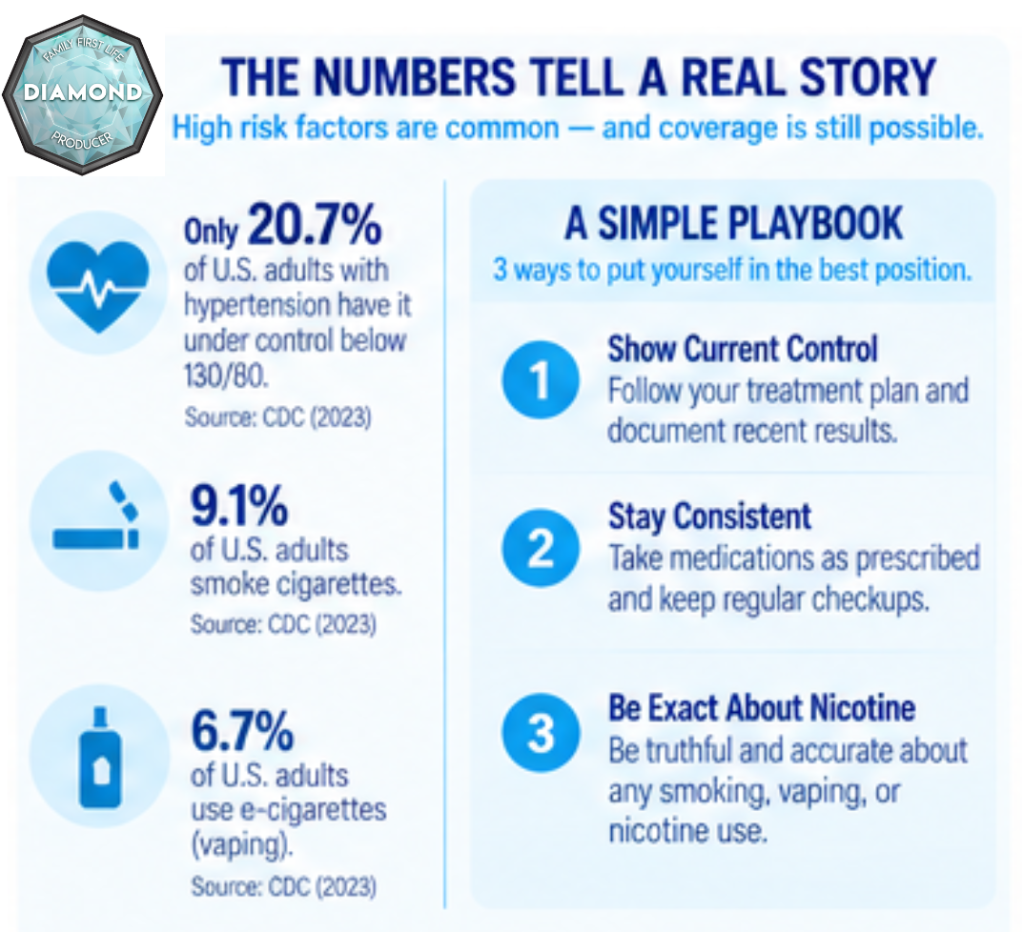
The CDC says hypertension affects almost one-half of U.S. adults, yet only 20.7% of adults with hypertension had it controlled to less than 130/80 mm Hg. That helps explain why underwriters look past the mere presence of high blood pressure and focus on whether it is actually controlled.
Here is the practical playbook:
- Show current control: Bring recent readings, A1C results, and physician follow-up notes when possible.
- Stay consistent with treatment: Gaps in medication use can look worse than the diagnosis itself.
- Be exact about nicotine: Cigarettes, cigars, chewing tobacco, and e-cigarette use can all affect rate class.
The CDC also reports that 9.1% of U.S. adults currently smoke cigarettes and 6.7% currently use e-cigarettes. Many applicants still assume vaping will be priced as non-tobacco, but some carriers treat nicotine exposure broadly. If you are unsure, ask before applying rather than guessing on the form.
What mistakes cause high-risk life insurance denials or inflated rates?
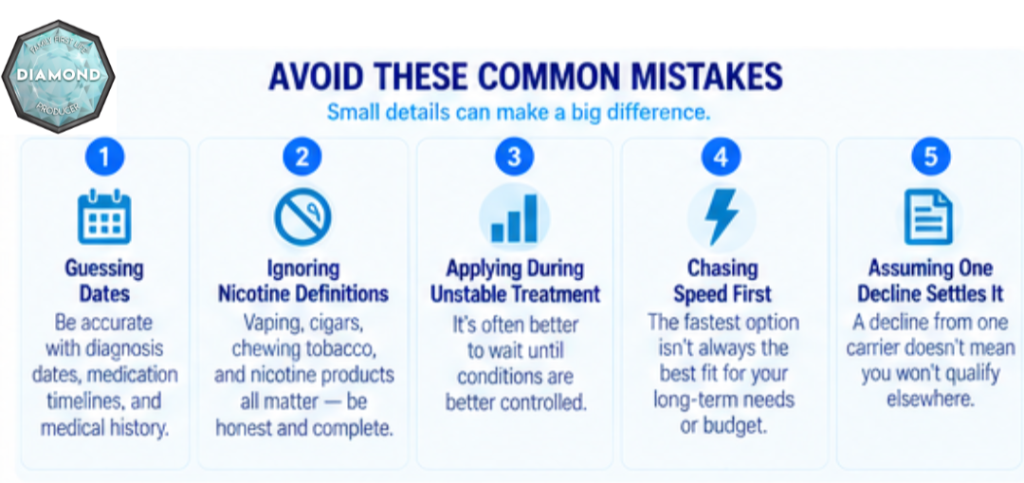
Most preventable problems are disclosure errors and bad plan matching. A carrier may not decline you for controlled diabetes or sleep apnea, yet still charge more if the application is incomplete, inconsistent, or sent to the wrong product type.
Several patterns show up again and again:
- Guessing dates: Underwriters compare your application with medical records and prescription history.
- Ignoring nicotine definitions: A cigar habit or e-cigarette use may still trigger tobacco pricing.
- Applying during unstable treatment: A recent medication change can make your file look unsettled.
- Chasing speed first: The fastest policy is not always the lowest-cost or highest-coverage option.
- Assuming one decline settles it: Different carriers can view the same condition very differently.
One more misconception deserves attention: a “healthy enough” self-assessment is not the same as an insurable profile. Life insurance underwriting is about measurable risk, and measurable risk lives in records, prescriptions, diagnoses, and timelines.

When does guaranteed issue make sense for very high-risk applicants?
Guaranteed issue is usually a last-resort option, and Life Insured By Chris can help compare it against simplified issue or final expense first because guaranteed issue often carries higher premiums, lower face amounts, and graded benefits in early policy years.
This type of policy can make sense when severe health problems, repeated declines, or advanced age make other forms of coverage unrealistic. It is often used for burial costs, small debts, or leaving a modest cash benefit to family members. The goal is accessibility, not pricing efficiency.
The trade-off is important. If you can still answer health questions favorably enough for simplified issue or no-exam underwriting, you may get more value there. If you cannot, guaranteed issue may still be the difference between having some protection and having none.
"Life Insured By Chris is an independent brokerage, not the insurer, so every no-exam, simplified issue, or guaranteed-issue policy still depends on third-party underwriting approval."

| Ready to compare your options? Reach out to Life Insured By Chris to review your high-risk life insurance options and get matched with coverage that fits your timeline, your budget, and the people you want to protect. → Visit: www.lifeinsuredbychris.com/schedule-a-consultation |