Life Insurance in VA: An 11-Step Guide to Buying the Right Policy
Buying life insurance is one of the biggest financial decisions you can make for your family. Whether you live in Northern Virginia, Richmond, Hampton Roads, or the Blue Ridge Mountains, knowing how the process works makes it easier to choose well. Life Insured By Chris is an independent brokerage that helps Virginia residents compare 30+ top-rated carriers and find coverage in plain English. This guide walks you through every step of buying life insurance in VA.
Prefer to talk it through?Book a free 15-minute coverage review, or see our Virginia life insurance page.
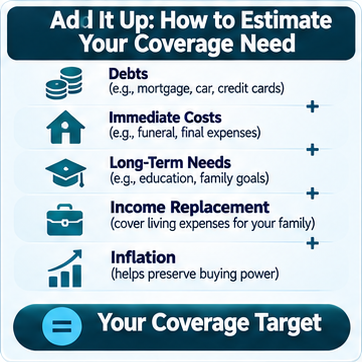
Step 1: Work out what you need and how much coverage fits
Start with a clear picture of why you want coverage and who depends on you. Add up:
- Debts: mortgage, car loans, credit cards, and personal loans
- Immediate costs: funeral and final medical bills
- Long-term needs: college tuition and future family expenses
- Income replacement: the years your spouse or dependents would need your paycheck
- Inflation: costs rise over time, and the cost of living differs across Virginia, from Arlington to Roanoke
You may have heard the rule of thumb of 10 to 15 times your annual income. It is a quick starting point, but a needs-based calculation is usually more accurate. Our guide to how much life insurance you need walks through it, or we can run the numbers with you in a free review.
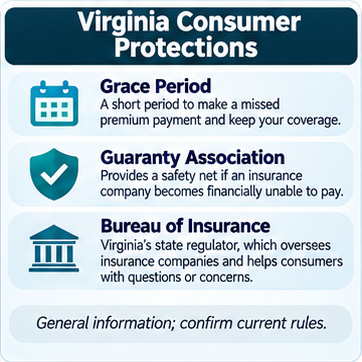
Step 2: Know Virginia's insurance rules and consumer protections
In Virginia, the State Corporation Commission's Bureau of Insurance regulates the insurance industry. A few protections worth knowing:
- Grace period: if you miss a premium payment, the policy typically gives you a grace period, often 31 days, to pay before coverage lapses. Check your own policy for the exact terms.
- Guaranty association: the Virginia Life, Accident and Sickness Insurance Guaranty Association helps protect policyholders if an insurer becomes insolvent, within certain limits.
- Complaints and questions: you can contact the Bureau of Insurance if you have a concern about an insurer or agent.
These protections give you peace of mind as you start shopping. Rules and limits can change, so confirm the details with the Bureau of Insurance or your agent.
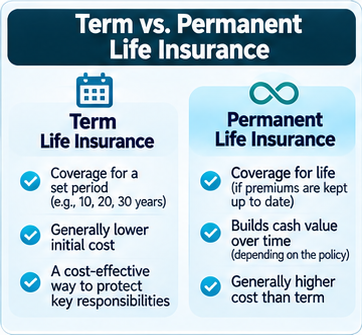
Step 3: Choose the right type of policy
Virginia residents generally choose between two main categories.
Term life insurance covers a set period, such as 10, 20, or 30 years. It is usually the most affordable option and fits a mortgage or the years your children are growing up. Learn more about term life insurance, or see our posts on 20-year term and 30-year term policies.
Permanent life insurance, including whole life and universal life, covers your entire lifetime and builds cash value. It costs more and is more complex, but it can support long-term and estate planning goals. See our guide to estate planning with life insurance.
If you are older and mainly want to cover funeral costs, final expense insurance may fit better. Not sure which to pick? Read term vs. whole life insurance.
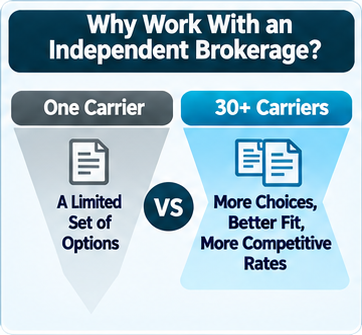
Step 4: Compare carriers and quotes
Not every insurer treats health conditions or lifestyle the same way. One carrier may offer a better rate for a smoker, while another is more flexible about a history of heart disease. Because Life Insured By Chris is independent, we are not limited to one company's products. We compare options from many carriers so you can see how each would price your situation.
When you compare quotes, look beyond the monthly premium. Check the carrier's financial strength ratings from agencies such as AM Best or S&P, which indicate its ability to pay future claims. Our guide to how to compare life insurance quotes shows what else to check.
Step 5: Gather your personal and medical information
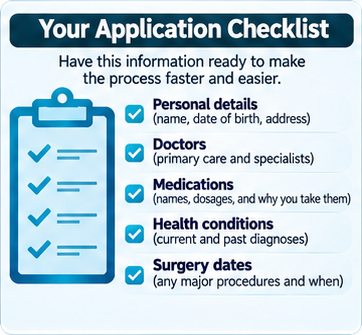
To make the application go smoothly, have the following ready:
- Your basic personal details, including your Social Security number and employment information
- The names and contact details of your doctors
- A list of current medications
- Dates and details of past surgeries, diagnoses, or chronic conditions
If you have been declined before, do not be discouraged. Many carriers have different guidelines, and the right match can make a big difference. See our guides to life insurance after health problems, life insurance for smokers, and life insurance with heart disease.
Step 6: Complete the application and interview
Most applications can be completed online or by phone. You will answer detailed questions about your health, family medical history, and lifestyle, including hobbies that insurers consider risky, such as scuba diving or private aviation. Be honest. Incorrect answers can lead to a denied claim later. After you apply, many carriers also hold a brief phone interview to confirm your answers and ask follow-up questions.
Step 7: Prepare for the medical exam, or skip it
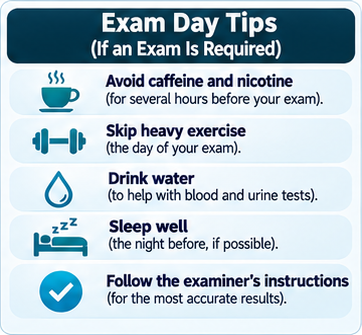
Many policies include a free paramedical exam. A technician usually comes to your home or office to record your height, weight, and blood pressure and to collect blood and urine samples. To help get an accurate reading:
- Avoid caffeine, nicotine, and heavy exercise for 24 hours beforehand
- Drink plenty of water
- Get a good night's sleep
Some healthy applicants can skip the exam through accelerated underwriting. Pricing and coverage limits can differ, so compare both paths. Read more about no medical exam life insurance, no exam life insurance quotes, and same day life insurance.
Step 8: Underwriting and review
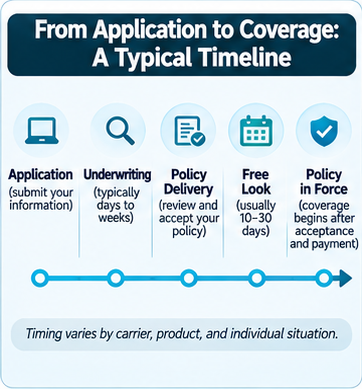
Underwriting is where the insurer evaluates your risk. The underwriter reviews your application, any exam results, and often your prescription history and motor vehicle record. This stage can take anywhere from a few days to several weeks, depending on your health history and the type of policy. Your results place you in a risk class, such as Preferred Best, Standard, or a rated class, and that class affects your premium. If the carrier needs more information, such as a doctor's statement, it can take longer. We stay in touch with the carrier during this period and keep you updated.
Step 9: Receive your policy and use the free look period
Once approved, the insurer issues your policy and sends the terms, death benefit, and premium schedule. You then have a free look period, a window during which you can review the policy and cancel it for a refund of the premiums you paid. In Virginia the free look period is at least 10 days for many individual policies, and the exact length depends on the type of policy and your circumstances, so check your policy. Use that time to confirm that the coverage matches what you expected, and double-check your beneficiary designations.
Step 10: Finalize the contract and set up payments
To put the policy in force, you sign the delivery requirements and make your first premium payment. Many Virginia residents set up automatic monthly drafts so coverage never lapses. Also tell your beneficiaries the policy exists, which company holds it, and where the documents are kept. You can give them our contact information too, and we can help if they ever need to file a claim. A policy only helps if the people it protects know how to use it.
Step 11: Review your coverage regularly
Life in Virginia changes. You might buy a larger home, welcome a child or grandchild, or change careers. Plan to review your coverage every two to three years and after any major life event. As your mortgage shrinks and your children become independent, you may need less coverage, or you may want to convert a term policy to permanent coverage if your policy allows it. See our guide to convertible term life insurance for how conversion works.
Life insurance across Virginia
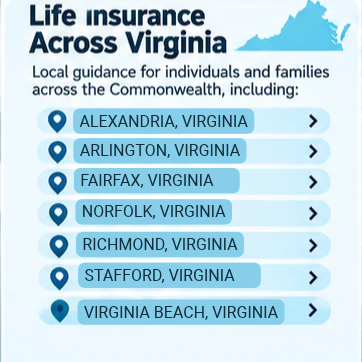
We help families in communities across the Commonwealth. Explore our local pages for Richmond, Arlington, Alexandria, Fairfax, Stafford, Virginia Beach, and Norfolk. We also work with families, working professionals, veterans, seniors, first-time buyers, and people with health challenges.
Frequently asked questions
How much does life insurance cost in Virginia?
Cost depends on your age, health, tobacco use, coverage amount, and policy type, not just where you live. Comparing several carriers is the best way to find a fair price.
Do I need a medical exam to get life insurance in VA?
Not always. Many healthy applicants can qualify for coverage without an exam, though coverage limits and pricing can differ. See our no medical exam page.
What type of life insurance is best for most Virginia families?
Term life insurance is often the most affordable way to protect a mortgage and income for a set period. The right choice depends on your goals, so book a free review and we can compare options.
Can I get life insurance in Virginia with a health condition?
Often, yes. Different carriers weigh health histories differently, which is why comparing matters.
Navigate the Virginia market with confidence
Buying life insurance does not have to be overwhelming. With an independent brokerage that is licensed in Virginia and 19 other states plus Washington, DC, and that compares 30+ carriers, you get choice, competitive pricing, and guidance without the jargon. Whether you need term life for a growing family or final expense coverage to protect your children from funeral costs, we are here to help.
Schedule your free 15-minute coverage review or explore all coverage options.

Choose your next step:
- Apply through Ethos for a fast, mobile-friendly application with multiple carriers
- Apply through InstaBrain for a guided, fully digital application
- Schedule a free 15-minute coverage review to have Life Insured By Chris compare your options for you
Laws, grace periods, free look periods, and guaranty association limits can change, and policy terms vary by carrier. Availability, underwriting decisions, and pricing vary by carrier, state, and individual health history. This article is educational and is not legal, tax, or financial advice.